Fourth Element is known for being a disruptor with their products often subverting established favourites. Could they do the same in the tech fins market? Self-confessed jetfin luddite Jason Brown puts their new tech fins to the test...
BARDOPHOTOGRAPHIC
Revolution or evolution?
New tech fin put to the test...
Tech divers are a fickle bunch. Despite the best efforts of gear manufacturers to tempt them with innovative new designs, they stubbornly cling on to a fin design that has been around since the 1960s – the humble jet fin pioneered by French inventor Georges Beuchat.

Chunky, reassuring heavy and lacking the fashionable finesse of more contemporary fins, the jet fin with its classic vented design is the 4x4 pickup of diving fins. They’re robust, unbreakable and a no-nonsense design that gets the job done.
Key Information
Product:
Tech Fins
Manufacturer:
Fourth Element
Review Date:
August 2022
Price:
£ 179.00
Photo Gallery:
More Info:
fourthelement.com
This feature and all images are copyright © Jason Brown and may not be republished, reproduced or copied in any form without the express written permission of the author. This feature and all images are available to licence.
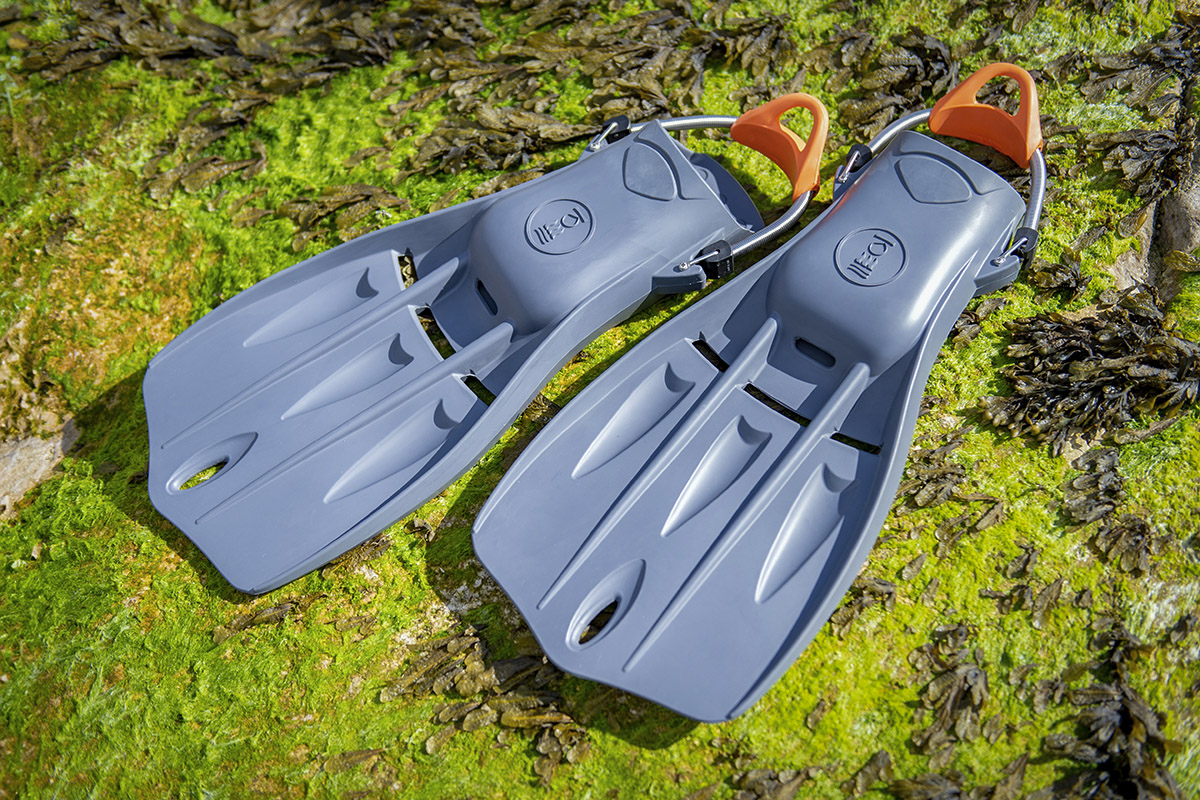
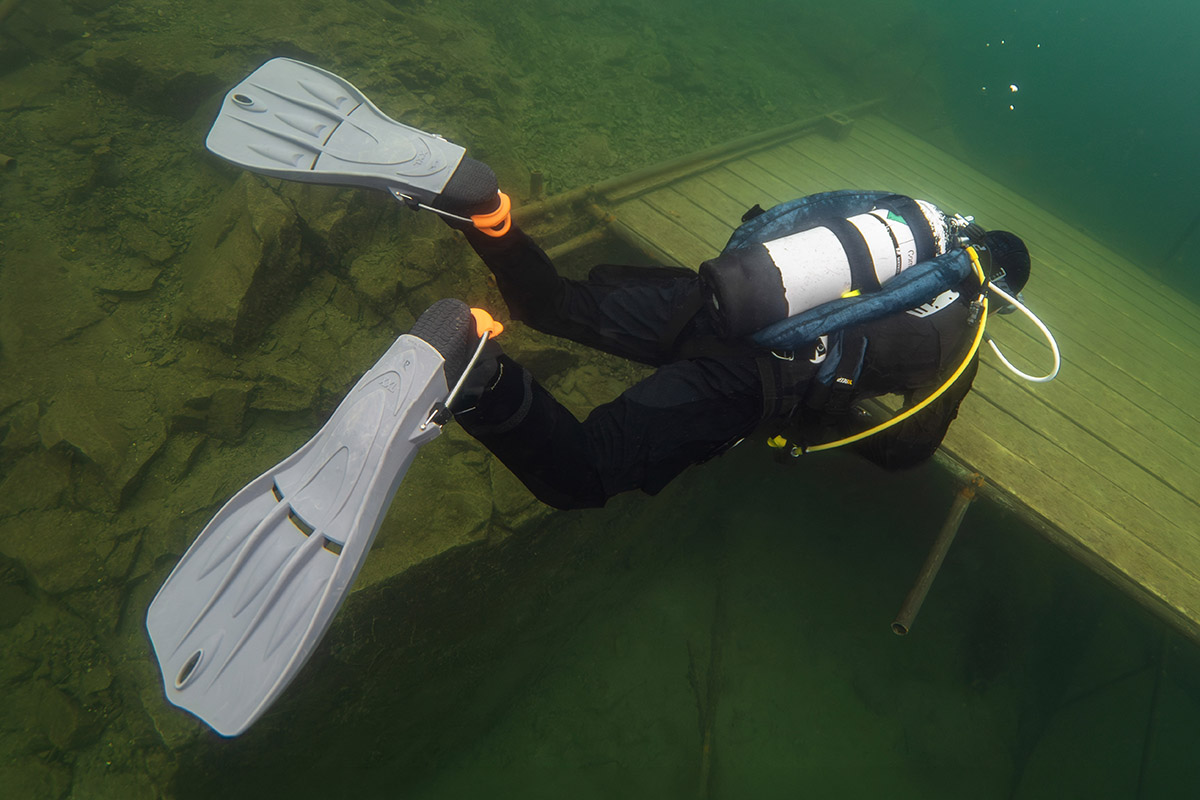
Fourth Element’s latest fins are aimed squarely at the tech market and it’s safe to say that they’ve consciously opted for a ‘if it aint broke, don’t fix it’ approach. The fin blades feature a wide, almost stubby paddle design which delivers the stability and manoeuvrability that tech divers love, allowing for precise control of the fin through the ankle. During my testing over the last couple of months, fin strokes like the classic frog kick and modified flutter were performed with ease and control whilst the stiffness of the blade made back finning (the fanciest finning trick in the tech diver’s repertoire) particularly effortless.

Subtle innovations...
In true Fourth Element style, they’ve snuck in a number of subtle innovations to subvert the norm. Most fins are injection-moulded using a thermoplastic rubber (TPR) but Fourth Element have opted for a natural rubber using a compression mold. The result is a fully recyclable fin with one key benefit – Fourth Element can vary the firmness (the so-called ‘Shore’ rating) of the rubber in key places. The foot pocket, for example, uses a softer rubber along the top of the pocket whilst maintaining a stiffer rubber for the base. In theory, this should make for a more comfortable fin which alleviates pressure on the Achilles tendon (and reduces the potential for cramp, we’re told) whilst maintaining stiffness where needed to transfer power and maintain stability and control.

It's safe to say that this approach isn’t without its foibles, however. During my testing, I did find that the softer lip along the top of the foot pocket did occasionally have the habit of rolling back inside itself when donning the fin in a bit of a hurry. I suspect the rock boots I use with my drysuit were causing the occasional snag – those that use turbo soles or wetsuit boots featuring a smoother dorsal (bridge) area may not experience this.
"The fin blades feature a wide, almost stubby paddle design which delivers the stability and manoeuvrability that tech divers love, allowing for precise control of the fin through the ankle."
"Fourth Element claim these ‘turbulence disruptors’ were inspired by scientific research carried out on Humpback Whales."
You don’t need to look far to spot another innovation – and I’m not talking about the jaunty choice of three colours (grey, aquamarine and, of course, hardcore techie black). Look closely and you’ll see three grooves scooped into the blade immediately below the vents on each fin. Fourth Element claim these ‘turbulence disruptors’ were inspired by scientific research carried out on Humpback Whales. These grooves – so they claim – disrupt the water flow across the fin to increase efficiency.

Quite how you’d measure such an efficiency gain with so many other factors at play is clearly beyond my understanding of hydrodynamics, but hey - they do make the fins look very cool. In practise, I suspect the efficiency of your own finning technique will have a far greater impact but then anything that can provide even some small counter to this has to be a good thing.

The simple things...
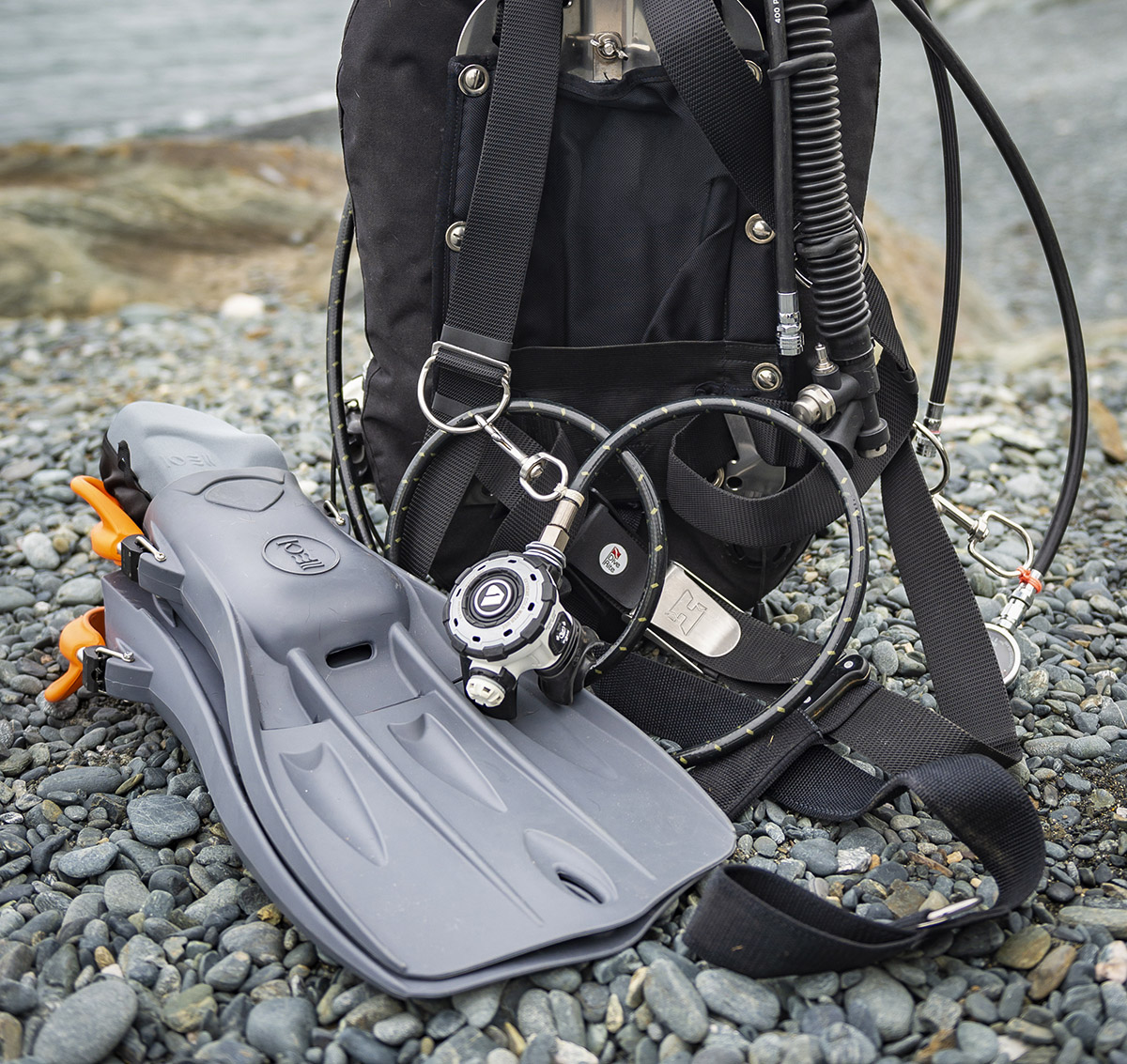
The more observant will have noticed another nice feature sported by these newcomers - an oval-shaped hole in the centre of each blade near the tip. Whilst not a new development – both Apeks’ RK3 fins and even some more recent Scubapro jetfins have them too – but Fourth Element have taken this design oddity and turned it into something genuinely useful by bundling a handy accessory that unlocks its usefulness - a nylon carrying strap attached to a marine-grade stainless steel bolt snap. This simple strap loops through the oval hole in both fins, keeping them securely together and, more usefully, allowing you to clip them off to a D-ring on your harness for a bit of ‘hands-free’ convenience.
Spring in your step...
This innocuous little extra really came into its own after a recent shore dive off Chesil Beach in Portland, UK. As any seasoned UK diver will confirm, exiting the water up Chesil’s steep pebble banks can be challenging even in flat seas. With the Fourth Element tech fins safely and securely stowed however, my hands were free to focus on getting my expensive (and fragile) camera system out of the water and onto the beach in one piece.

Even out of the water, this handy little extra proved genuinely useful for simply keeping the fins together – something that can be quite challenging on a busy dive boat! A fancy loop with a bolt snap may not seem like a headline feature but you’ll soon grow to love the convenience it provides. Quite why other fin manufacturers never bundled something similar is beyond me.

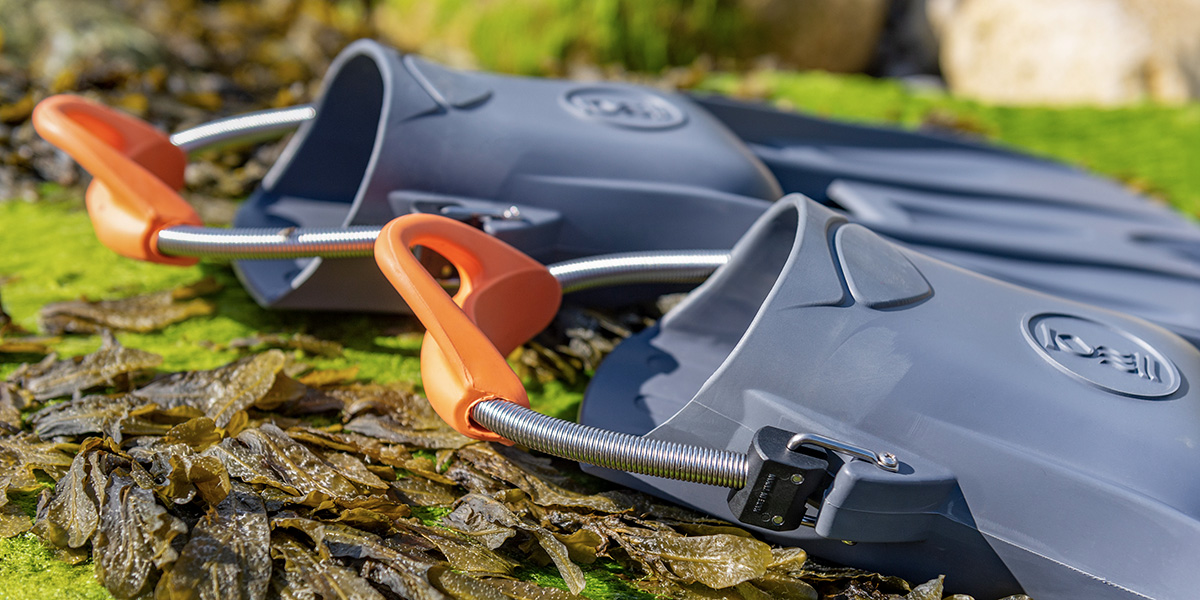
As you’d expect from a fin with tech aspirations, they’re fitted with the obligatory metal spring fin straps with chunky heel pads. A decent set of marine-grade spring straps aren’t cheap so it’s great to see them included at such a competitive price. They’re easily replaceable too should you need to replace the spring straps over time. Not that you should need to for quite a while – they’re made from decent marine grade steel so a post-dive fresh water rinse and dry should see them lasting for many years to come.
If there’s one question that pops up repeatedly when discussing fins, it’s the issue of weight. The Fourth Element tech fins are a little bit lighter than their Scubapro equivalents – a fact that may cause some concern to the more entrenched jetfin fans.

Out of the water, a pair of Fourth Element tech fins in size 2XL are approximately 2.90 kg (6.40 lbs) compared to 3.28 kg (7.23 lbs) for a pair of 2XL Scubapros – a difference of just 0.38 kg (0.83 lbs). In water, they’re 0.14 kg (0.30 lbs) lighter in fresh and 0.13 kg (0.28 lbs) lighter in salt. In practice, the difference in weight between the two brands of fin was indiscernible – I challenge anyone to state that this small weight difference had a noticeable impact on their stability!

Revolution or Evolution?
I’m a bit of a luddite when it comes to fins but these new Fourth Element tech fins have impressed me. Perhaps Fourth Element's smartest design choice was to accept that tech divers don't like change – we know what we like and we know it works. Instead, Fourth Element have taken a proven fin design and have enhanced it rather than attempt to reinvent. What many tech divers want isn’t revolution – it’s evolution and that’s exactly what the Fourth Element tech fins deliver.

The Fourth Element tech fins are a rock-solid fin design in a cost-effective, comfortable package with no compromises that gets the job done. In my book, that makes these new tech fins something of a winner.
All content © Jason Brown 2010-2026
No content may be reproduced without express written permission.