Ask any scuba diver to identify the finer details of your average shipwreck and there's a good chance most will struggle. Jason Brown checks out Ashton East's new book that promises to demystify the maritime jargon.
BARDOPHOTOGRAPHIC
Enhance your knowledge of
all things shipwreck...
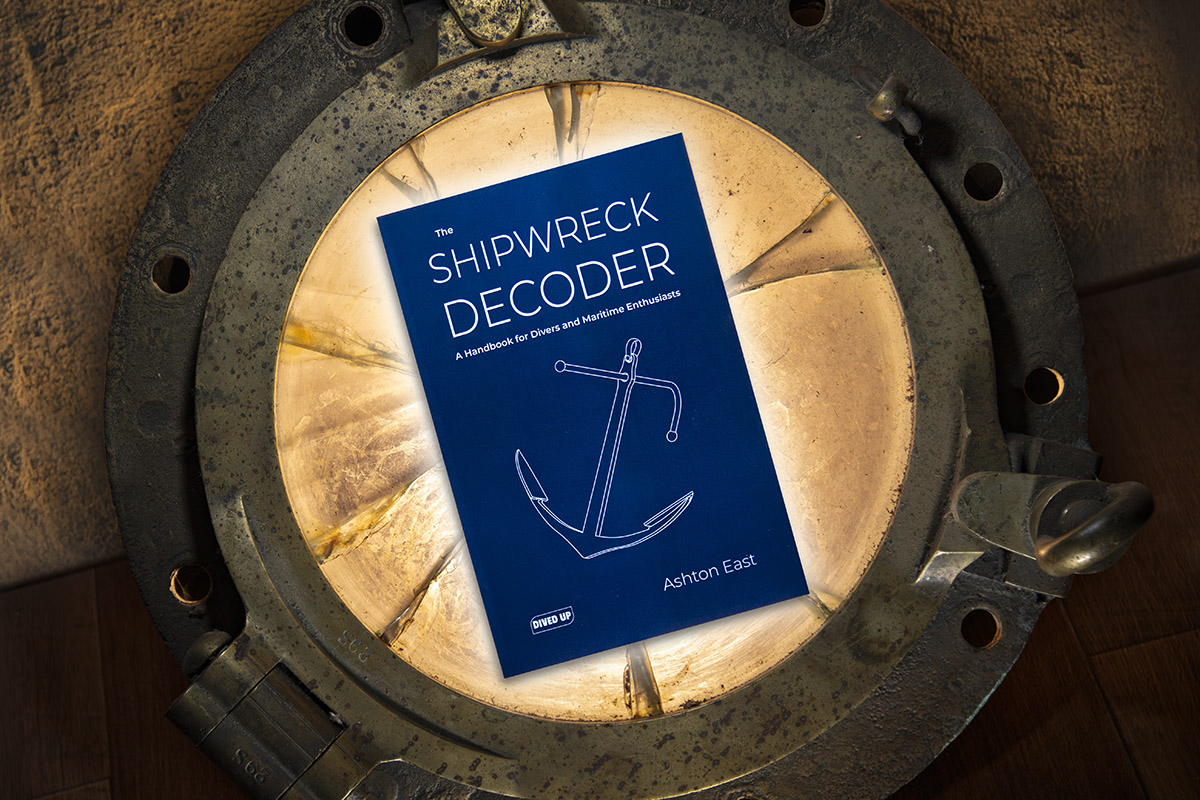
Don’t know your stern from your elbow fittings? Puzzled by cascabels, transoms, whipstaffs and pintles? Wish you could differentiate between an admiralty long shank and a trotman?

Despite being a big fan of wreck diving for longer than I care to mention, I make no secret that my knowledge of the 'nuts and bolts' of your average shipwreck is pretty limited - other than recognising which end is the 'pointy bit' and which is the 'blunt bit', that's as far as I go.

I suspect I'm not alone either. Most divers, if they're honest, probably suffer from the same knowledge deficiency. Fret not though as help could finally be at hand in the shape of Ashton East's new book, The Shipwreck Decoder.
Key Information
Product:
The Shipwreck Decoder
Publisher:
DivedUp Publications
Review Date:
24th March 2026
Price:
£ 20.00
More Info:
divedup.com
This feature and all images are copyright © Jason Brown and may not be republished, reproduced or copied in any form without the express written permission of the author. This feature and all images are available to licence.
Released in September 2025 from Dived Up Publications, The Shipwreck Decoder is an exhaustive illustrated reference guide aimed at divers and maritime enthusiasts looking to gain a better understanding of the layout and anatomy of shipwrecks, both ancient and modern. This 208 page A5-format guide book covers all the essential information that you need to gain a better understanding of those piles of scrap metal that we divers find so alluring.

The book opens with a gentle orientation of basic maritime terms like bow, stern, port, starboard and so on. It then builds upon these basics with a look at the core structural components common to many sea-faring vessels - forecastles, gunwale, the keel and, of course, the source of many a snigger, the poop deck. It's all pretty basic stuff but essential groundwork for the more detailed information heading into port once the book begins to drill down deep into the nitty gritty of ship anatomy.

Ropes off...
With the basics covered, the book casts off with a detailed look at perhaps that most ubiquitous element of any ship - it's hull. Starting with wooden hulls, the chapter explores common hull shapes, their internal structures, construction and joining methods, structural reinforcements and more. We then move onto the more commonly found metal hulls with a similar approach followed. Particularly fascinating is the coverage of different metal types, the construction methods used over the centuries and how to identify them underwater. Tell-tail signs like the colour of the corrosion 'crust' and the underlying metal, plus the construction methods used (rivets or welds?) really help divers to understand a wreck's age, purpose and country of origin.

Author Ashton East employs a very logical approach to examine each area of a ship's anatomy. Each distinct area is broken down into its own chapter with each following on from the other like a well-planned guided tour. The section covering the hull, for example, is followed by additional chapters that build upon it by examining the bow and then the stern sections. In each chapter, elements unique to those areas are also covered - the bow chapter, for example, includes detailed coverage of anchor types, bow thrusters and mooring points whilst the stern chapter covers propulsion and steering systems. All very logical and easy to follow.
"Each distinct area is broken down into its own chapter with each following on from the other like a well-planned guided tour."
What is perhaps most surprising aboiut The Shipwreck Decoder is the sheer volume of information that author Ashton East has managed to cram into it's relatively diminuitive page count. All the more obvious stuff receives the attention it deserves without drowning you in minutiae - the chapters on different propulsion systems (wind, steam, combustion and electric) are particular well handled, for example.

The galley sink...
With so much effort poured into these key areas, you'd be forgiven for assuming that the book would cut corners elsewhere but no - even the most mundane areas are covered. The chapter covering fittings and equipment is a good case in point - as well as the stuff you would expect to see covered (deck fittings for mooring, gun ports and portholes, winches and, of course, the one thing every diver wants to know - the location of the ship's bell), you'll also find less obvious stuff like ventilation systems, bilge pumps and even the ship's galley and head (toilets) receiving attention. Bringing the coverage right up to date, even contemporary stuff like modern navigation systems and computers are covered.
Military wrecks...
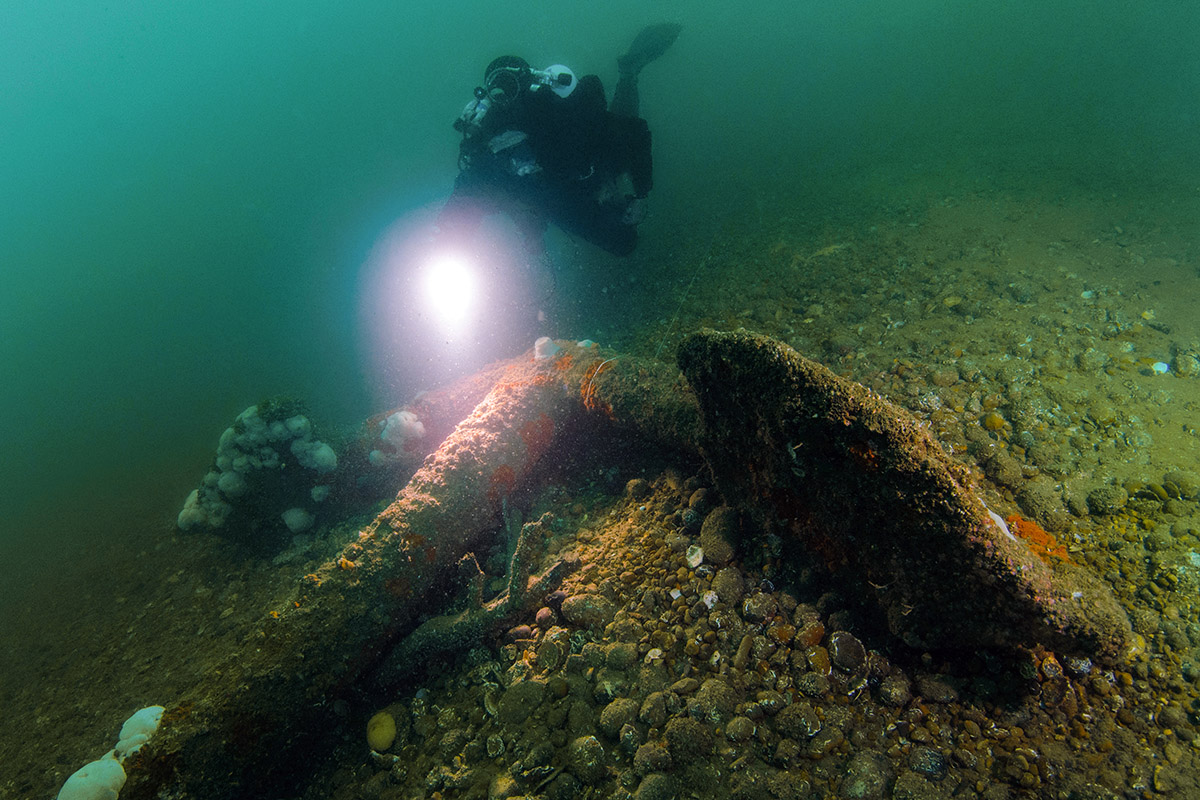
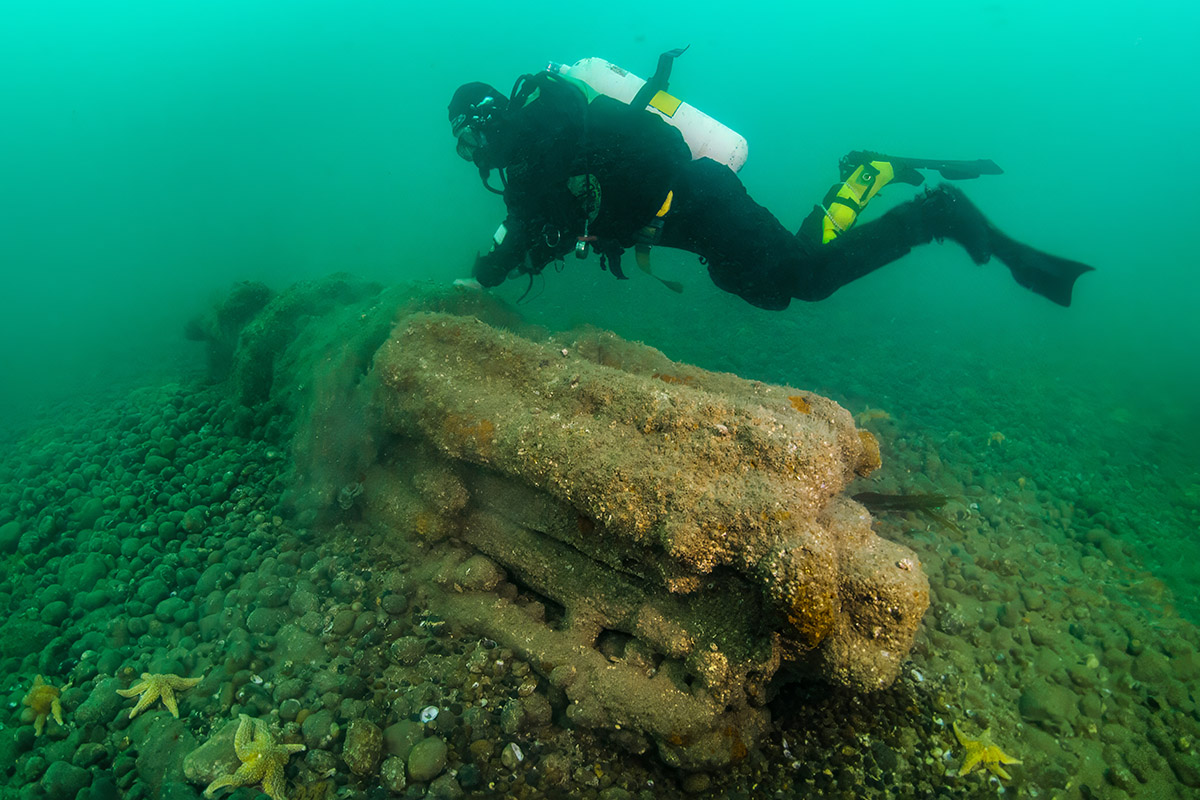
The unique features of military vessels receive good coverage too with a couple of chapters dedicated to cannon-age and modern arnaments respectively. The chapter on cannon-age arnaments is particularly detailed with each component part of different anchor types covered in good detail. For any diver who has visited historic wreck sites like the Coronation near Plymouth, this chapter really helps to demystify the design and function of these signature objects.

Worth particular note is the coverage of different cannon types (carronades, mortars, swivel guns etc) and their mounts, the materials and manufacturing processes used to make them and a handy timeline showing when they were most commonly used. The projectiles fired from cannon are covered too including some that look thoroughly terrifying! You definitely would not want to be on the wrong end of a spinning bar shot!

The one patch of rough water on an otherwise flat-calm sea is the chapter on submarines that appears at the very end of the book. Compared to the obsessive level of detail in the preceeding chapters, this chapter does feel like something of an afterthought. Whilst the basic structure of a submarine are given the briefest of coverage, other key areas are skipped altogether. The internal layout of a typical submarine is really only mentioned in passing as are key structural components like propulsion and air purification systems. If I'd been Ashton East, I would have held this last chapter back for a second book - there's certainly enough potential content there to fill another 200 pages! Maybe we'll see The Submarine Decoder one day? Here's hoping...
"You’ll know where to look for stuff, how to interpret what you see and maybe even find that illusive ship’s bell!"
They say 'a picture paints a thousand words' and never has this been truer than within the pages of The Shipwreck Decoder. As clear and concise as Ashton's descriptions are, the 400+ illustrations that accompany his text are very welcome. Following a common technical illustration style that lends itself perfectly to the subject matter, they really help to clarify and reinforce what could so easily have been a highly confusing subject matter.

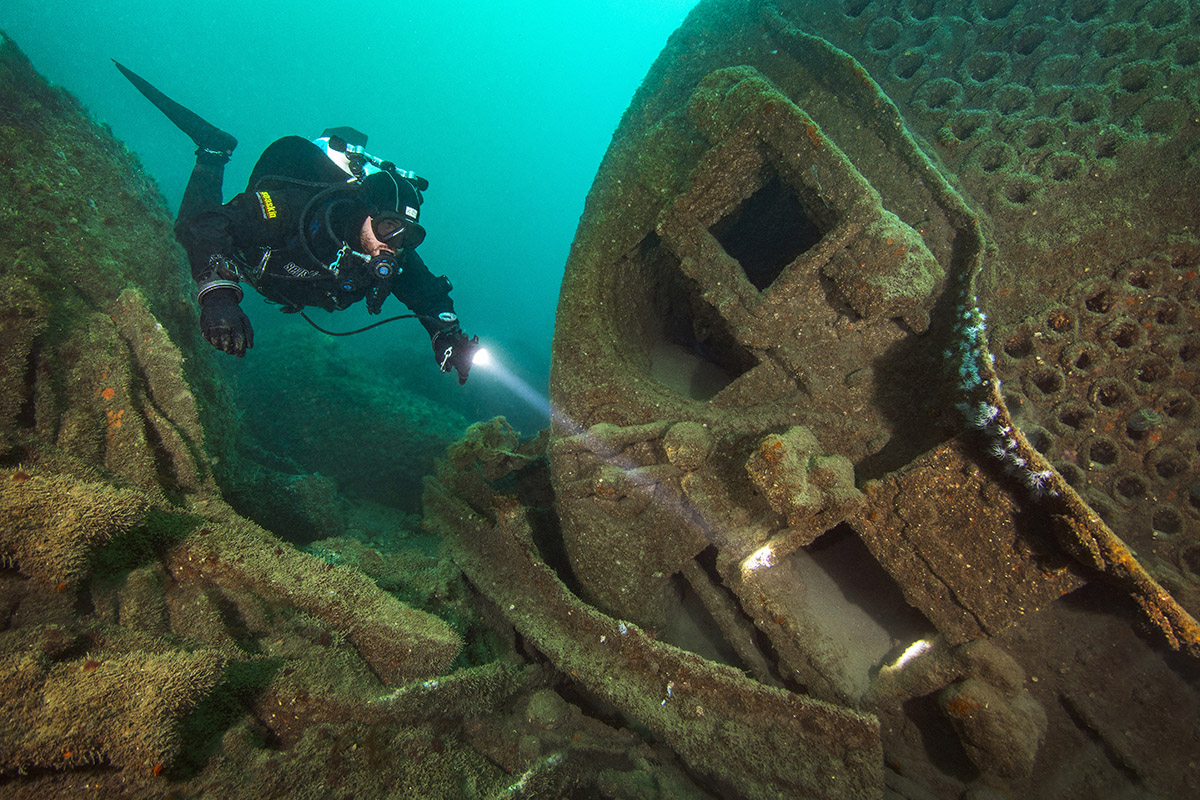
They work especially well when illustrating multiple variants of the same object type - cannon and anchor being noteworthy examples. The section on boilers makes good use of them too, particularly for detailing the many variants of steam boiler - Schulz-Thornycroft, Babcox & Wilcox, Mumford, Admiralty and so on. Each boiler is illustrated from more than one angle, making identification so much easier. Most wreck divers have encountered boilers on the sea bed - thanks to the Shipwreck Decoder, you'll be able to identify them with confidence!

In Conclusion
As divers, gaining a basic understanding of the shipwrecks we’re privileged to visit can really enhance our dives - simply knowing the layout and construction of a vessel can really help make your dives not only more enjoyable, but enlightening too. With a little bit of knowledge under your weight belt, you'll be able to explore more confidently by easily identifying key areas of the wreck and their component parts.

Thanks to this little gem of a book, that confusing pile of scrap on the sea bed will just make a lot more sense - you’ll know where to look for stuff, how to interpret what you see and maybe even find that illusive ship’s bell! For me, that makes The Shipwreck Decoder an essential and invaluable resource for any diver.
All content © Jason Brown 2010-2026
No content may be reproduced without express written permission.