They say you never forget your first. Whether it's your first love, first car or your very first dive, those precious firsts remain lodged in our memories for a lifetime. Jason Brown returns to the site of his very first sea dive – Chesil Cove.
BARDOPHOTOGRAPHIC

Rediscovering Portland's
most popular cove...

Diving is full of first experiences and perhaps the most cherished diving memory of all is our first 'real' dive.

Free from the confines of a swimming pool, I fondly recall the excitement of entering the underwater world for the very first time. For me, it was an adrenalin rush of mixed emotions - wonder, trepidation and, dare I say it, a little bit of fear all blended to shape the memory of that moment when my world suddenly became so much bigger.
Feature Information
Author:
Jason Brown
Feature catagory:
Shore Diving
Photo Gallery:

This feature and all images are copyright © Jason Brown and may not be republished, reproduced or copied in any form without the express written permission of the author. This feature and all images are available to licence.
My first foray into the underwater world took place at a dive site that to this day remains close to my heart - Chesil Cove. Even after almost three decades of diving, the irresistible siren song of Chesil lures me back time and time again. It's my guilty little pleasure – a site that I revisit to recapture that sense of awe and wonder I felt on my very first training dive. Looking back, it was a far from glamourous start. None of my gear fitted particularly well and most of it was well past its use by date. My wetsuit leaked and my BCD was two sizes too small but none of that mattered. My first dive at Chesil Cove was a captivating experience that enchants me to this very day.

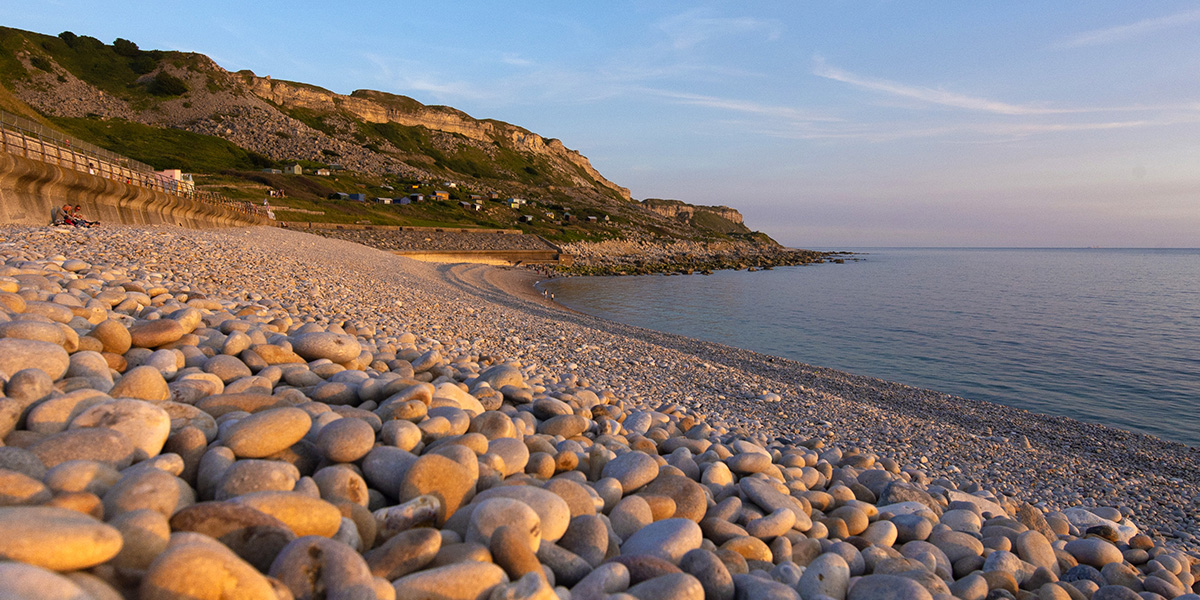
For those yet to experience the fun of scaling its steep pebble banks, Chesil Cove is nestled in the shadow of the imposing cliffs of Portland in Dorset. Thrusting out into the English Channel for a good four miles, this windswept peninsula is known for its rugged coastline and archaic mythology - just don’t mention the rabbits! Rising up over 100 metres above sea level, Portland forms a natural barrier that shields Chesil Cove from all but the most determined south-westerly winds.

Opening the Door...

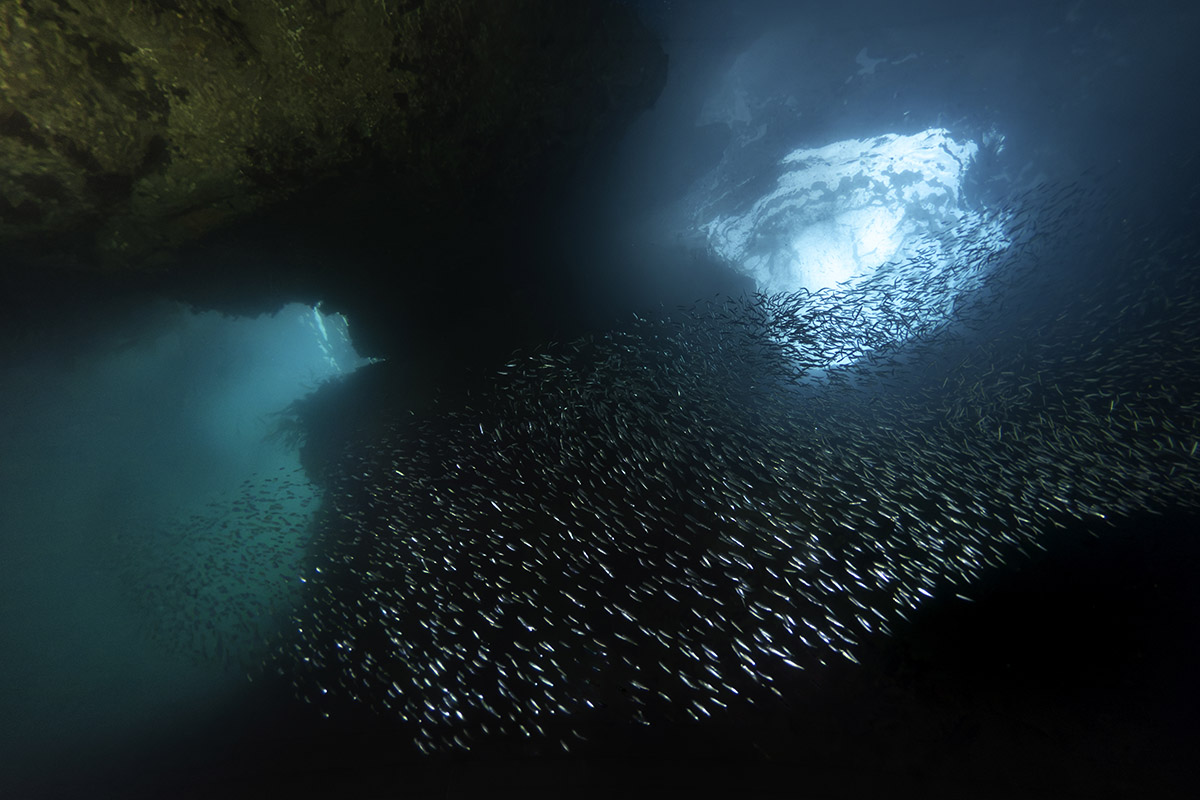
My most recent visit to the area started on a sunny Friday evening in August with a dive out of Portland Marina on one of the many charter boats that work the waters around the Island. I'd jumped on a late booking and joined a group of divers from the Seahorse Trust out on an evening jolly. With kit loaded on our dive boat WaveRider, skipper Dave Collins took us out for what promised to be a very pleasant dusk dive off Durdle Door. Famous for its arch, we had our sights set on something just as spectacular beneath the waves – it's famous sea cave.
"...this windswept peninsula is known for its rugged coastline, history and archaic mythology - just don't mention the rabbits!"
"They had good reason to seek refuge with at least one person back on-board WaveRider sighting a bluefin tuna hunting at speed in the waters outside."
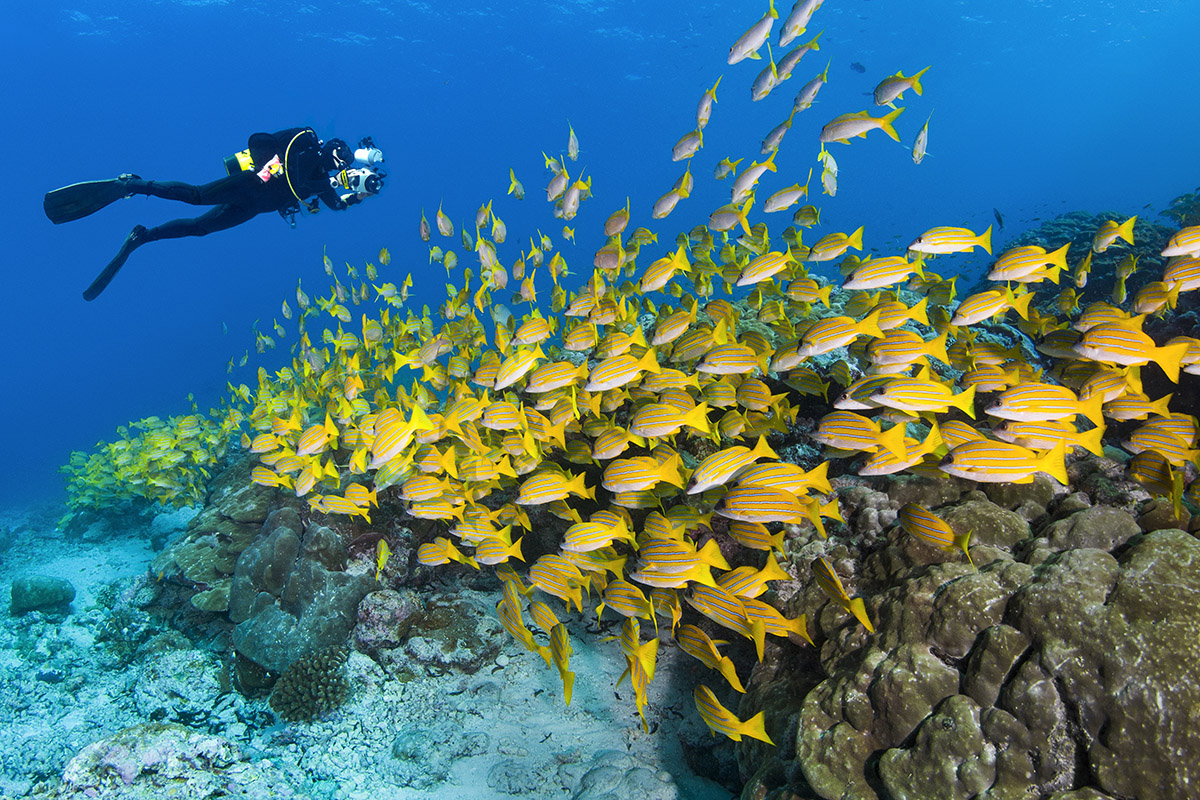
Calling it a 'cave' is probably pushing it a little but it's a lovely little dive nonetheless and, at just seven metres below the surface, it's suitable for even the most inexperienced diver. With the light gently diminishing, I spent a good hour underwater shooting images of a large shoal of bait fish throwing shapes within the confined safety of the cave. They had good reason to seek refuge with at least one person back on-board WaveRider sighting a bluefin tuna hunting at speed in the waters outside. Sadly, I didn't get a glimpse of this impressive apex predator through the darkening murk but the bait fish clearly felt its presence.

Wild camping...

With everyone buzzing post-dive from what was without doubt an unforgettable dive, nature laid on a spectacular sunset as we headed back into the Marina. With kit unloaded and my car's suspension now feeling the strain of all that wet gear, I headed up to a campsite near Portland Bill for a night under the stars. Portland has really embraced the concept of 'wild camping' in recent years so there's plenty of low-cost accommodation on the island if your idea of comfort is sleeping rough in a wind-swept field.

Joined by wife and dog, Saturday saw me indulging in 'family time' – a concept that anyone sharing their life with a non-diving spouse will understand. Striking a balance between time underwater and time with family is an important part of any relationship that you're keen to see continue. For me, my 'dry day' consisted mostly of me jealously watching dive boats heading out on flat seas without me. Not fun. Especially when the diving conditions are so good and you've got a boot-full of dive gear ready to go.
With the weekend drawing to a close, I hatched a plan to squeeze in a last cheeky shore dive off Chesil Cove. With tent packed and wife and dog in tow, I headed down to Chesil Cove on the off-chance of bagging one of a small number of parking spaces along Brandy Row. Disappointment set in pretty quickly though when it became clear that every space was taken. But Lady Luck had other plans for me that day as who should I bump into but Dan from Lungfish Rebreathers. Fortune had provided me with everything I needed to squeeze in that illusive last dive – a 'forward operating base' (Dan's car), a willing buddy and the all-important excuse I need to placate wife and dog. The plan was hatched – Dan and I were going diving.

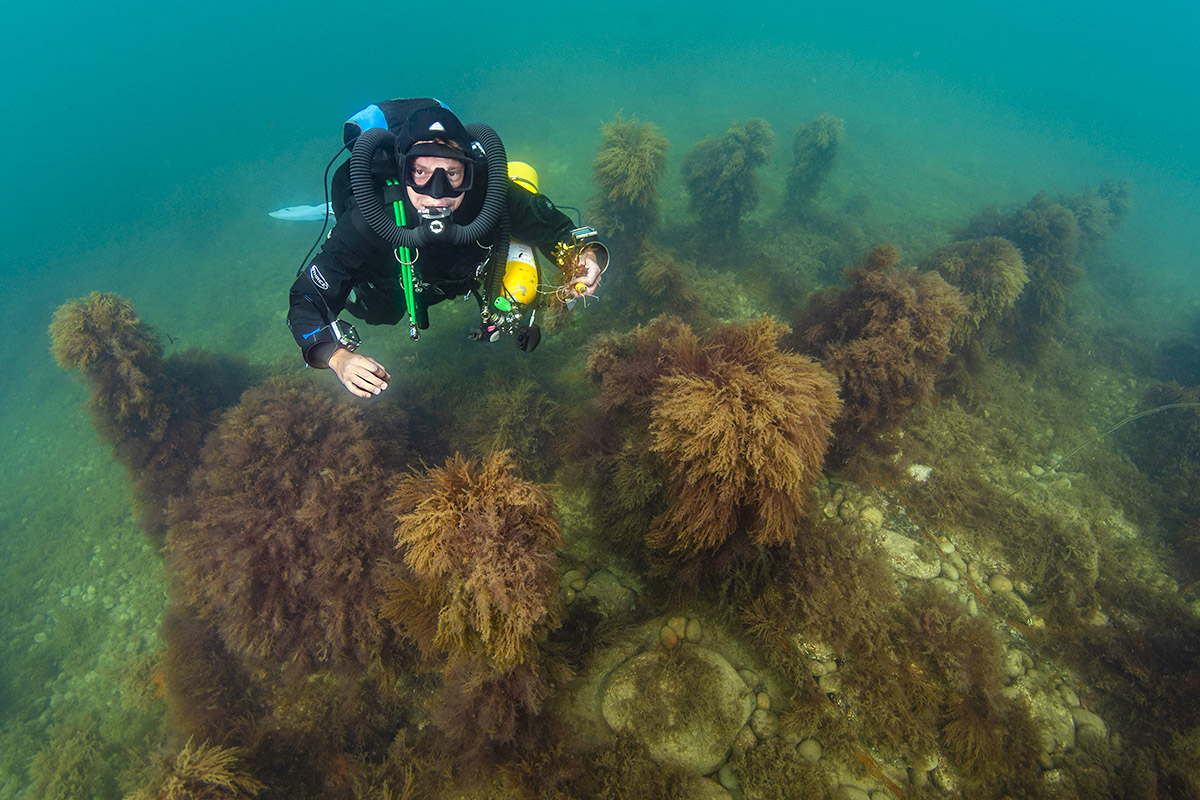
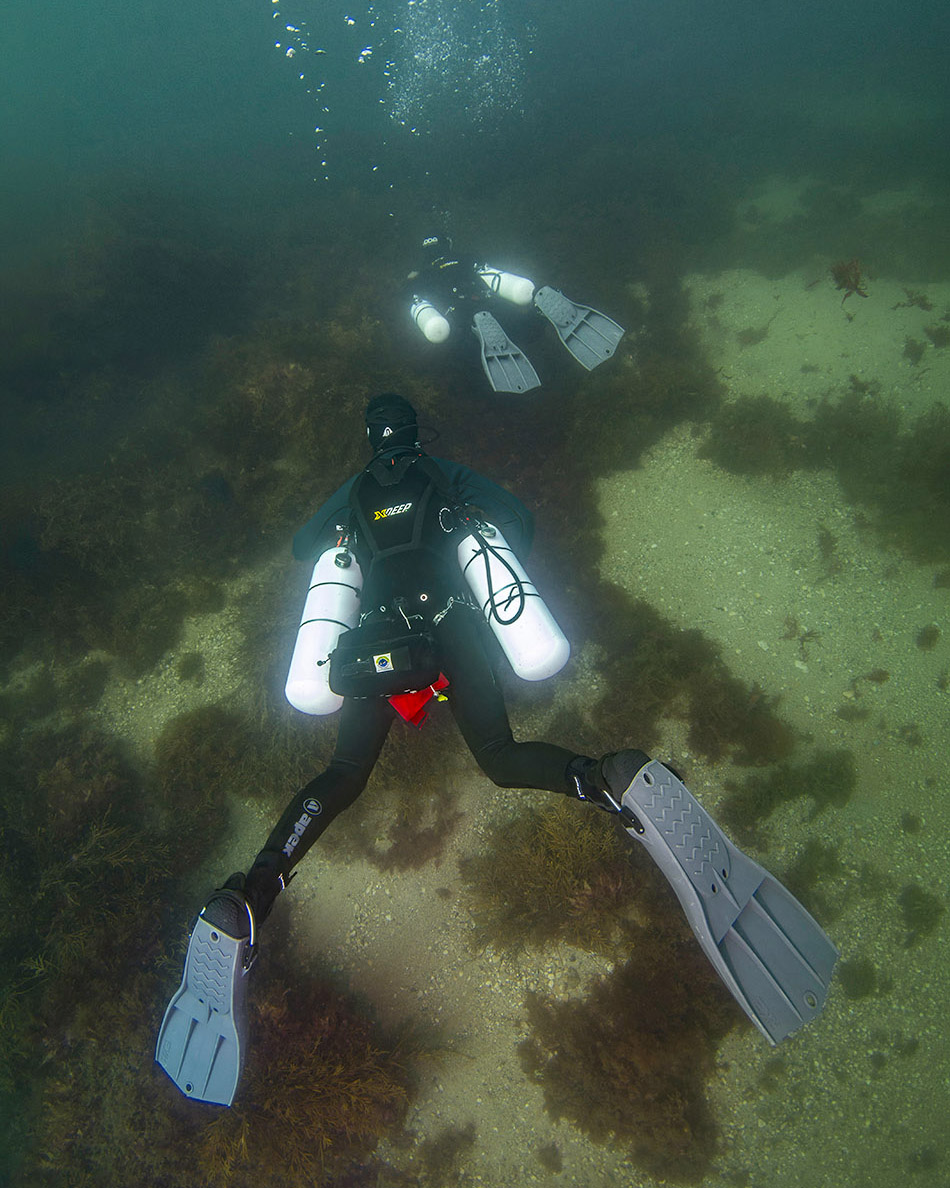
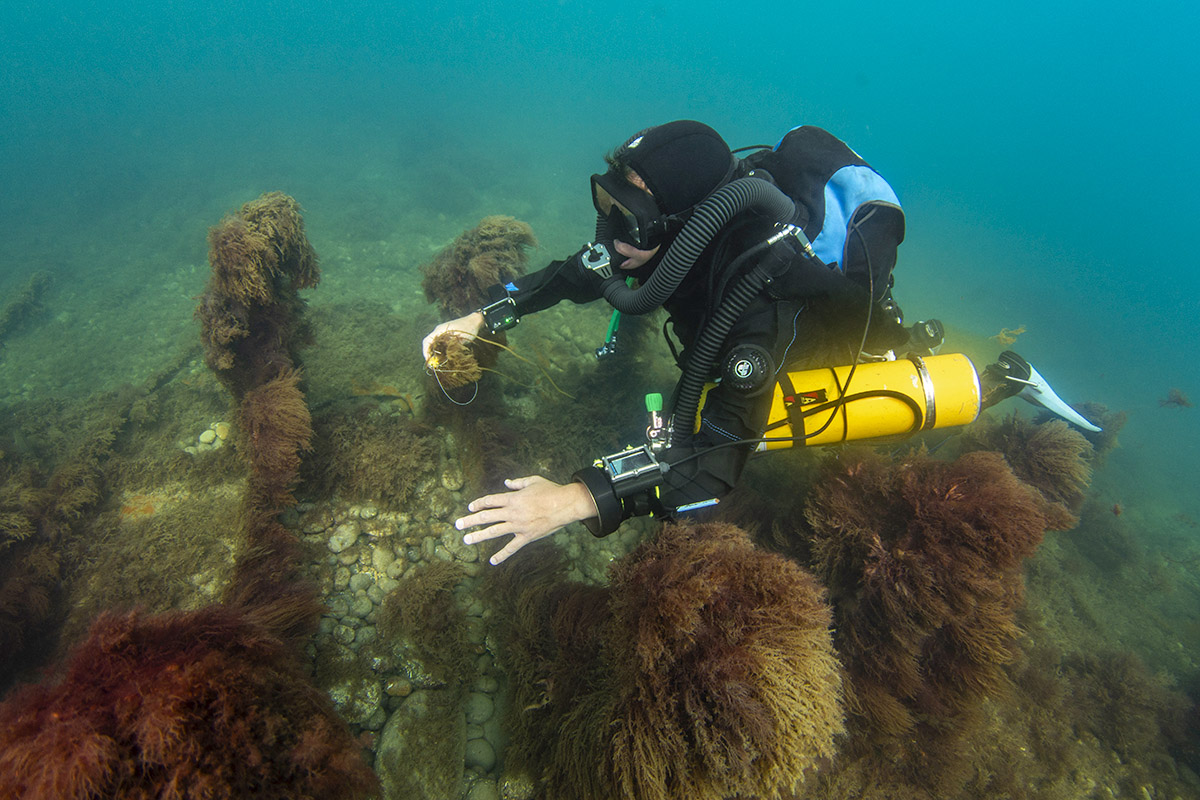
With very little wind and a clear blue sky, conditions couldn't have been better as we carried our gear down to the beach. Around us other divers were making the most of the day with reports of good viz fuelling our urgency to hit the water. With my heavy twinset and Dan's closed-circuit rebreather, it's fair to say that we both may have looked a little out of place as we made our way to the water's edge. Getting in the water is easy enough but the climb back out over Chesil's signature rolling pebbles is hard work – a single cylinder or sidemount is arguably a more optimal choice.

Sea life magnet...

Leaving the surface, we started our descent finning down the gentle pebble-covered slope towards the point where most Chesil divers start their dive – the wreck of the SS Prevesa. Now unrecognisable, a small skeletal section is all that remain of the Greek cargo steamship that foundered in thick fog off Chesil beach in January 1920.

Despite its diminutive size, this little section of wreckage serves as a veritable magnet for sea life. A multitude of fish species both large and small take shelter in its rusting remains whilst both spider and velvet swimming crabs peer out at passing divers. Even the occasional lobster can be found hiding under its shattered hull plates.
"Later in the season, divers even report sightings of one of Chesil's more nomadic visitors – the grey triggerfish."
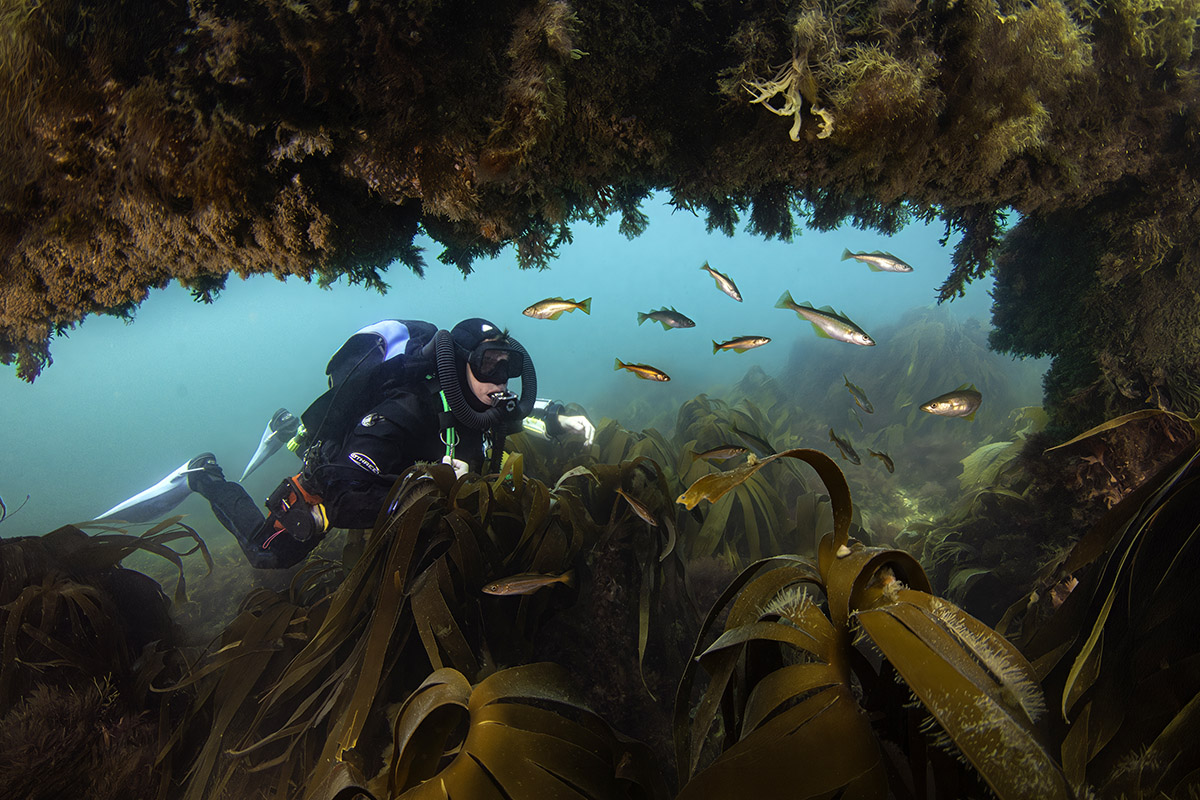
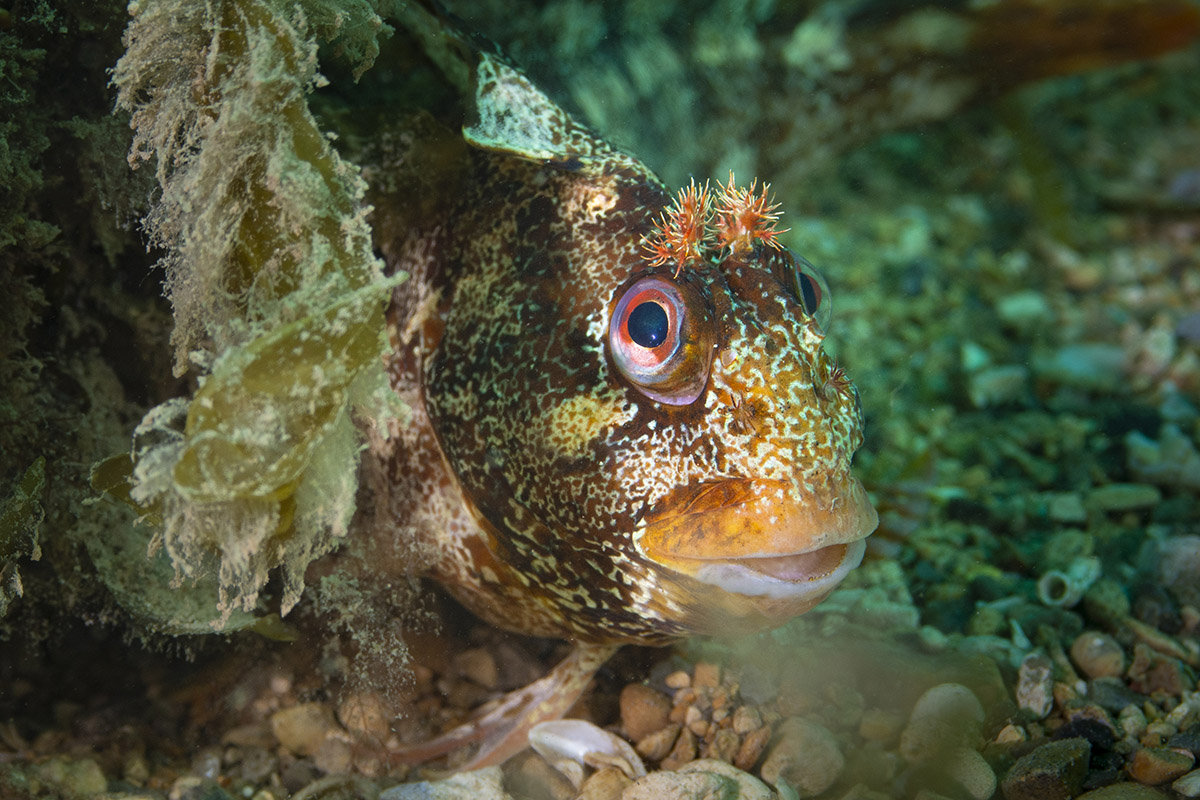
Moving out into deeper water reveals a changing sea bed that alternates between large sandy areas and rocky outcrops covered in marine growth. Marine life encounters are plentiful in these areas with territorial cuttlefish, tub gurnards, pollack and pouting, dog fish, large ballan wrasse and even the occasional solitary john dory making an appearance.

Later in the season, divers even report sightings of one of Chesil's more nomadic visitors – the grey triggerfish. A popular target for sport fishermen, the triggerfish usually congregate around the nearby wreck of the Royal Adelaide but some also find their way to Chesil Cove.

Reclaimed by nature...

My favourite part of the beach can be found at the southern end where a thick blanket of kelp covers boulders as big as cars. Here you'll find something that at face value, isn't the most pleasant thing you could wish to encounter underwater – the remains of an old elevated sewerage pipe that runs out from the beach towards deeper water. Long abandoned, large sections of the pipe remain elevated above the sea floor and now serve as home to a surprising amount of fish life. Covered in marine growth and teeming with life, it's a surprisingly rewarding area of the beach to visit.

An Octopus's Garden...

After a good 80 minutes exploring all the best nooks and crannies that Chesil has to offer, we found our way back to almost the exact point where we'd entered the water – no mean feat in itself. The remains of the Prevesa wreck also make for a very useful navigation marker.

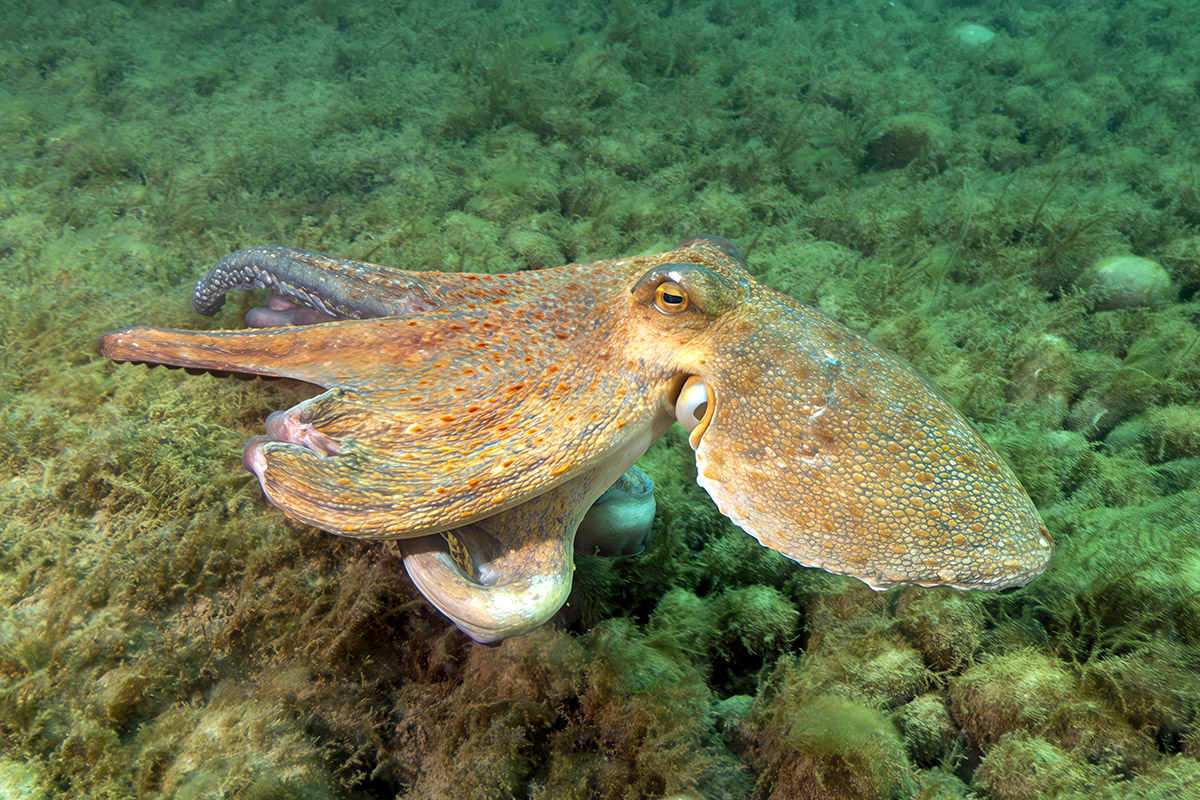
As we broke the surface, we met sidemount divers Sara and James who, like us, had just completed their dive. Greetings exchanged, I informed them how we'd searched without success for the much-heralded Chesil octopus. “Oh it's just over there” commented Sarah, pointing to an area about six metres from our current position. Needless to say, Dan and I didn't need to be told twice as we spiralled round and headed straight back underwater in search of the illusive cephalopod.

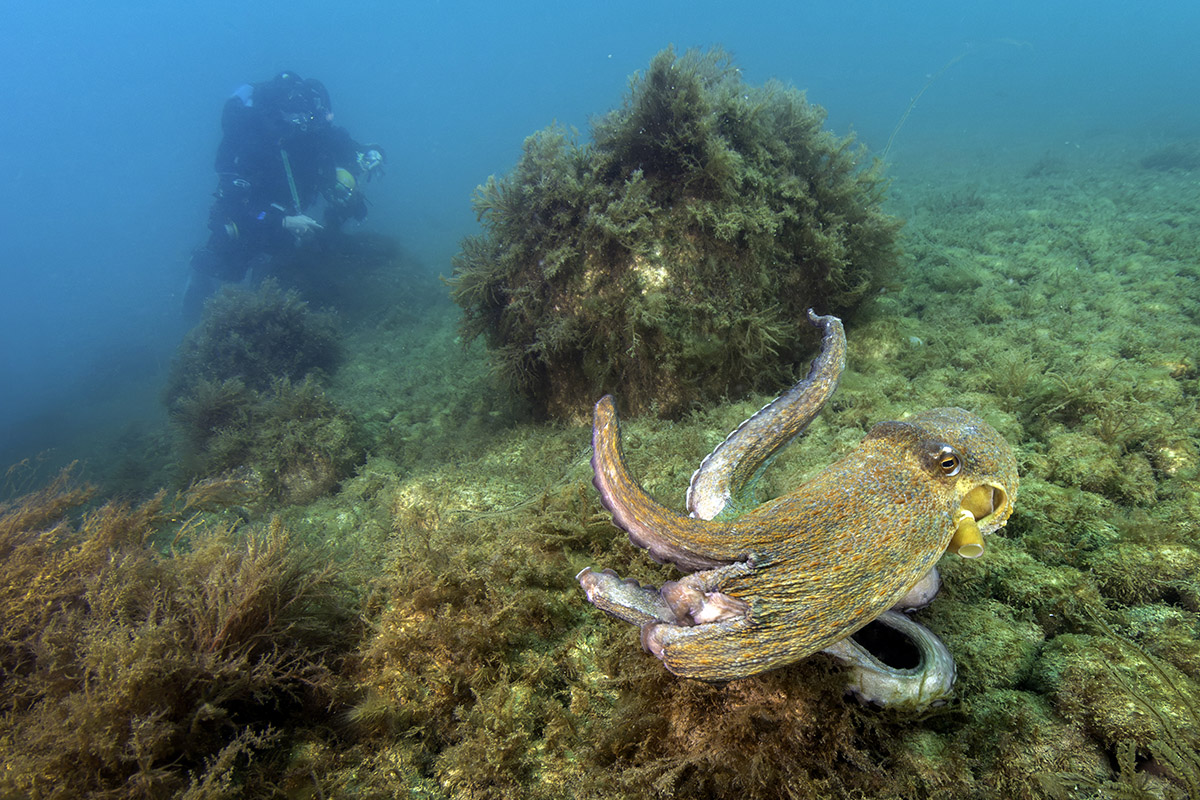
Thanks to Sara's timely directions, it didn't take long for us to track down our eight-legged quarry. Squeezed into a gap between two of the many large boulders that line the shallows, the octopus peered on curiously as I excitedly snapped off the first few frames.

Seeing its own reflection in a camera dome port clearly didn’t suit our little friend as it broke cover and dashed away from the underwater paparazzi. Shooting a few final frames as it made its break for freedom, we left it to the safety of its new hiding place and headed once again to the surface. Whilst the encounter was brief, it was certainly memorable and was just the sort of 'icing on the cake' moment that the very best dives are made of.
Home News Library Features Reviews About Portfolio
All content © Jason Brown 2010-2026
No content may be reproduced without express written permission.