Home About Portfolio Photo Library Articles & Features
SEARCH
Paragraph Eleven, Confirm...
It’s been 100 years since the German High Seas fleet sank beneath the surface of Scapa Flow in what would become one of the momentous episodes of War War One. Jason Brown was there to witness the commemorations...
Commemorating the 100-year
anniversary...
“Paragraph Eleven, confirm”. Those seemingly innocuous words marked the beginning of an extraordinary chapter in naval history that to this day continues to fascinate divers and historians alike.

At 10:30 am on the 21st June 1919, Admiral Ludwig von Reuter issued the coded order that would lead to the mass scuttling of fifty-two ships of the German High Seas fleet interned at Scapa Flow in Orkney.
Feature Details
Author:
Jason Brown
Publication Date:
December 2019
Publication:
Scuba Diver UK
Feature catagory:
Shipwrecks
Photo Gallery #1:
Photo Gallery #2:
Photo Gallery #2:

This feature and all images are copyright © Jason Brown and may not be republished, reproduced or copied in any form without the express written permission of the author. This feature and all images are available to licence.
History had never before witnessed such a cataclysmic event. As the Royal Navy looked on helplessly, one of the world’s most potent and terrifying naval fleets committed what amounted to an act of self-destruction on a grand scale by simultaneously opening seacocks and smashing pipes. With the British Grand Fleet away on exercises, those British sailors that remained behind tried in vain to prevent the scuttling, leading to the deaths of nine unarmed German sailors in the chaos that ensued.

Final act of defiance...
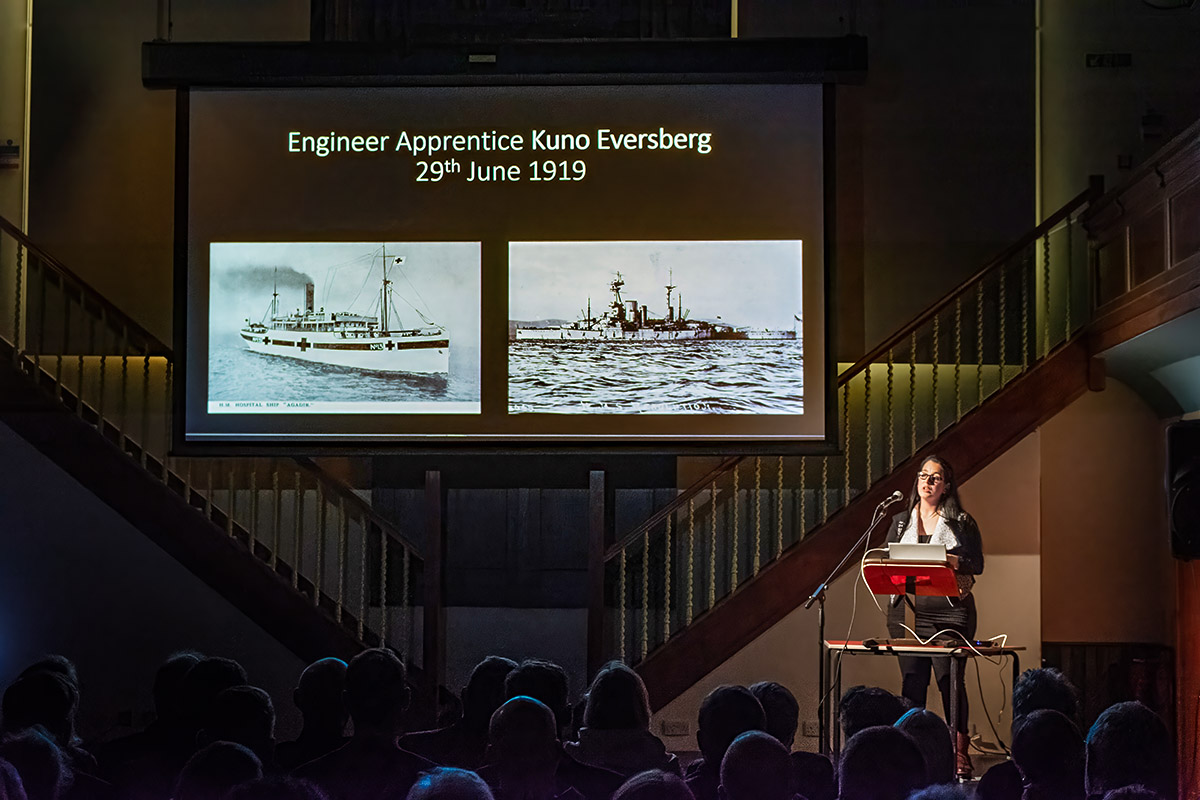
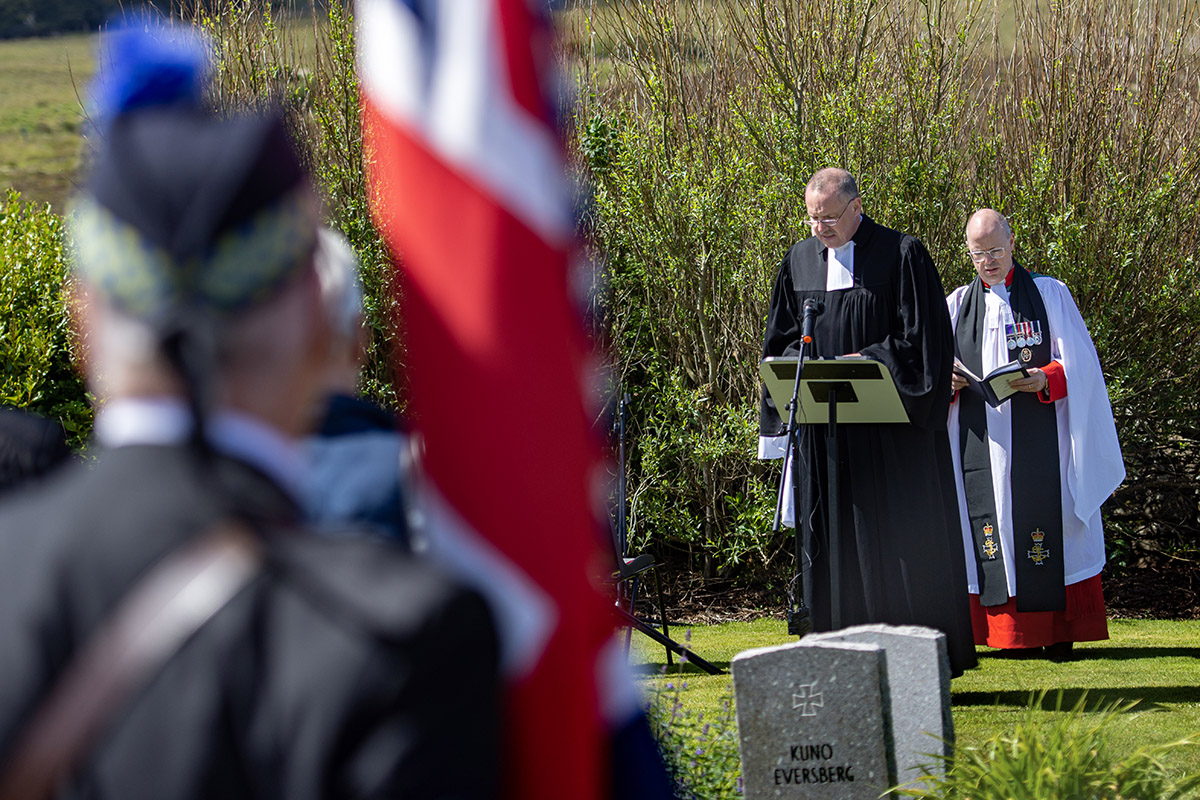
The story of the scuttling and the subsequent salvage of the German fleet continues to resonate, particularly on the islands of Orkney. The seven ships that remain beneath the waters of Scapa Flow are so much more than just rusting relics of times gone by – they’re lasting monuments to a far deeper human story. As we look back on the events of 21st June 1919, we remember all those affected, particularly the nine German sailors who so tragically lost their lives on that day. We also remember those who lost their lives during the period of internment and the days that followed the scuttling including Kuno Eversberg – the last German sailor to die at Scapa Flow.

As the years past, the majority of von Reuter’s fleet would be raised in one of the greatest salvage operations in history. Today, only seven of the 52 ships remain on the sea bed but they still offer some of the best wreck diving you’ll find anywhere on the planet. Scapa Flow continues to attract divers from across the globe, drawn by the promise of battleships and cruisers armed to the teeth and ready for war. Beyond the allure of all these terrible weapons of war, Scapa offers something far more profound - a glimpse into a moment in history that rocked the world. They mark a day on which the German Imperial Navy that had posed such a powerful threat to the allies during so many years of global war drew its last defiant breath. What remain are lasting, poignant reminders of a war that would shape the world for generations to come.
Marking the Centenary
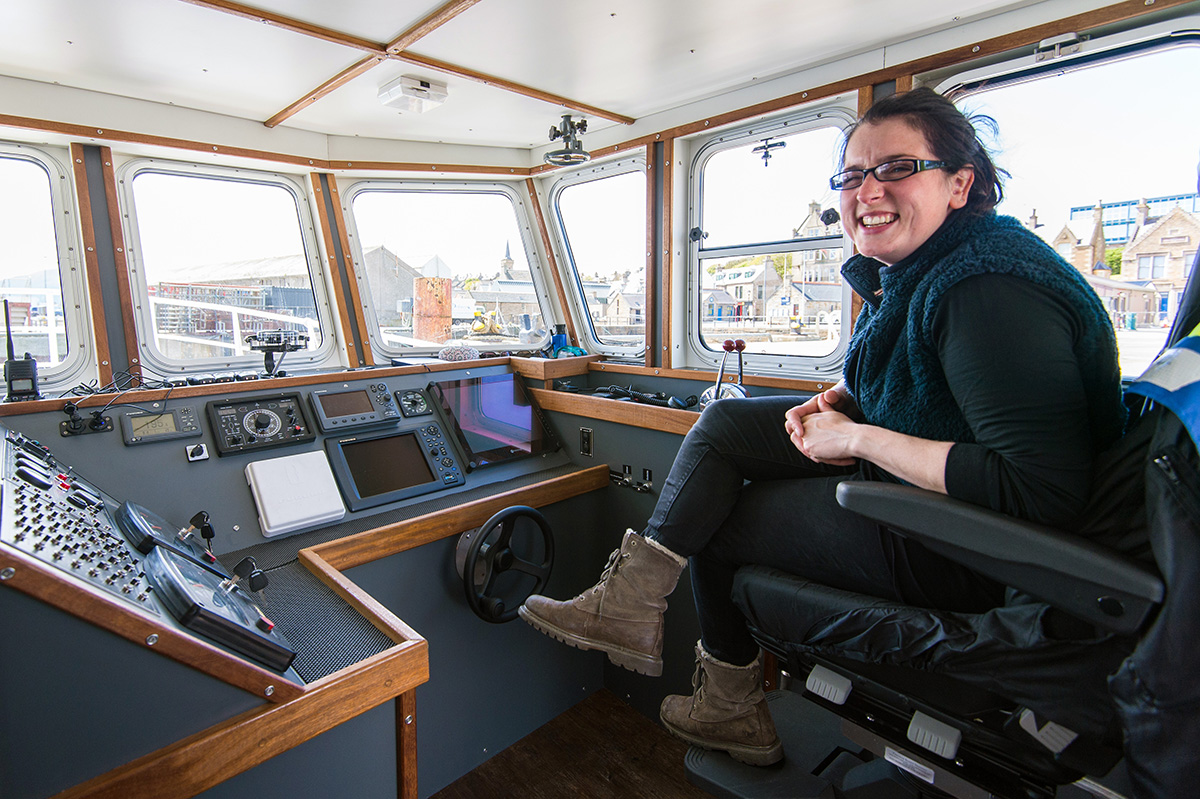
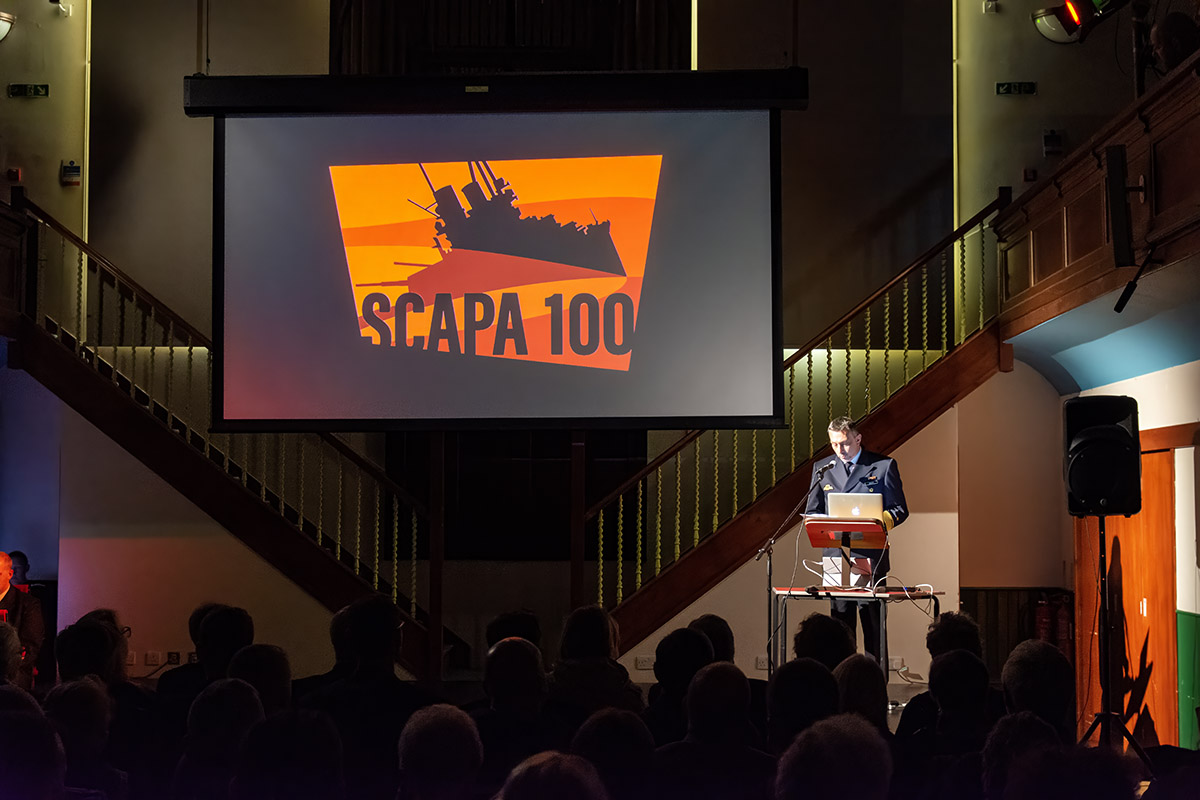
For Scapa Flow skipper Emily Turton, marking the centenary of the scuttling has dominated her life for several years leading up to the 100 year anniversary. With Emily as the driving force, Scapa 100 began to take shape in 2016 to plan for the centenary, to promote Scapa Flow and Orkney and to promote and support related historically important events.

In Emily’s own words, Scapa 100 was just one of several important dates that deserved recognition. "A great team of people have worked very hard to mark the major events of WWI in Orkney from the Battle of Jutland, the loss of HMS Hampshire and HMS Vanguard to the centenary of the Armistice. Scapa 100 was the last event and deserved our best efforts".

The two weeks covering the Scapa 100 commemorations were expected to be busy with many of the resident dive boats that work Scapa Flow taking bookings for the Scapa 100 weeks three years in advance. With another ten dive boats heading north to the Orkneys for the period of the commemorations, it was clear that Scapa was going to experience a large influx of divers visiting the area.

"Stromness had a real buzz about it for the centenary – we ran a huge programme of events, most of which were free of charge. It was fantastic to see so many people, both divers and non-divers engage with the initiative and immerse themselves in all things Scapa Flow" added Emily Turton.
"Stromness had a real buzz about it for the centenary – we ran a huge programme of events, most of which were free of charge."
Eat, Sleep, Dive...
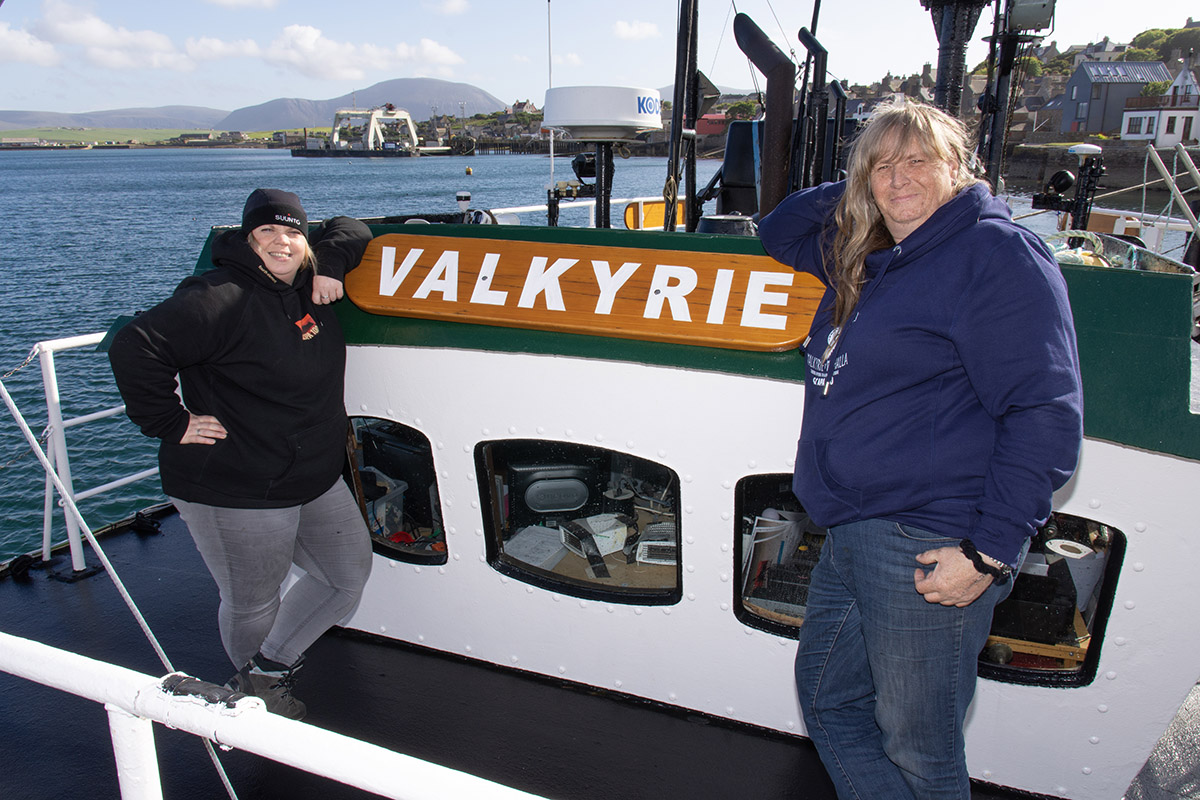
For my Scapa 100 adventure, I was lucky to secure a spot on one of the best boats to operate in the area – MV Valkyrie. Skippered by Helen Hadley, MV Valkyrie is a 22 metre long ex-fishing boat converted to a full-service diving liveaboard. With accommodation for up to twelve divers in six twin bunked cabins on the lower deck and all the mod-cons you could wish for, she’s a great choice for divers wanting to experience the fantastic diving and Helen’s acclaimed hospitality. The food onboard is legendary – if you haven’t put on weight by the end of your week onboard, something is seriously wrong!

Like most visiting divers, my Scapa 100 experience followed a familiar pattern. After a hearty breakfast, we’d head out into the flow for a morning dive on one of the seven WW1 German wrecks starting with the shallower cruisers before moving up to the deeper battleships as the week progressed. The diving in Scapa Flow is suitable for most so even single tank divers can experience all seven wrecks with ease. For those prepared for a little decompression, the wrecks can be even more rewarding.

After a hearty lunch onboard Valkyrie and a generous surface snooze, we jumped back in for a second dive on one of the shallower cruisers. For me, the cruisers offer some of the best diving in Scapa Flow. Not only do you get the benefit of more bottom time but they tend to be orientated on their side rather than completely ‘turned turtle’ like the battleships. This invariably means that more of their superstructure is on show and, of course, the stuff we all want to see – lots and lots of big guns!
"Particularly captivating was a discussion of the true motives behind the scuttling. Had von Reuter acted of his own volition or had he received secret orders from Berlin?"
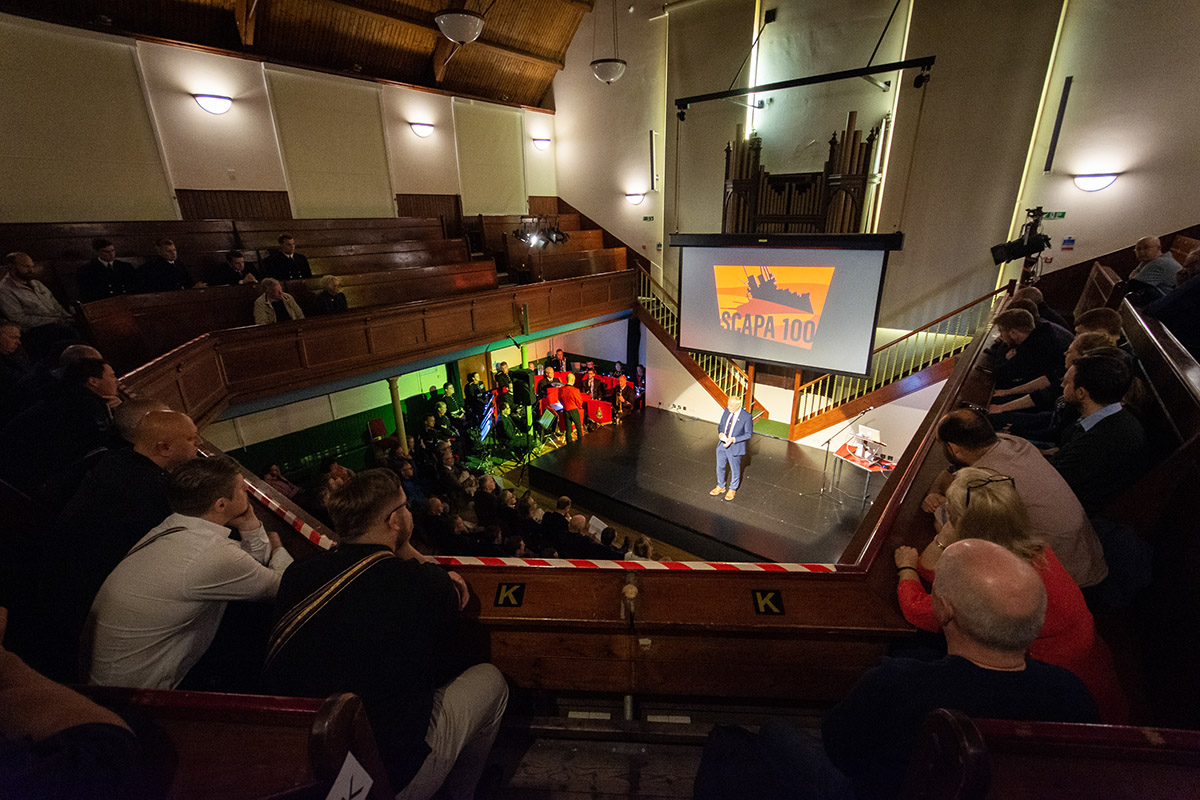
Returning to Stromness each evening, the Scapa 100 Hub located upstairs in the Royal Hotel was the place to be. Acting as the official ‘event HQ’ for the two weeks of the commemorations, many divers from visiting boats in the area congregated here to chat about their dives over a drink and get clued-up on the many commemorative activities taking place during their stay. There was certainly plenty to choose from – a diverse selection of talks, theatre and musical performances, museum visits, historical displays and even eye-popping virtual reality dives!

Flight of the Kestrel
For those interested in the historical perspective, a series of talks delivered in the nearby Stromness Town Hall were not to be missed. On one evening, author David Meara recounted the story of a group of Stromness schoolchildren who were taken on a tour of Scapa Flow onboard the tug The Flying Kestrel to see the anchored German Fleet.

Amongst the excited group of children was David's own mother Winnie Thorpe who, along with her classmates, watched on with child-like awe as the dramatic events of the 21st June unfolded around them. Drawing on eyewitness accounts and archive material including personal letters and contemporary photographs, David's fascinating talk provided a very personal insight into the events of that day.

Following the historical theme, Professor Dr Michael Epkenhans from the Bundeswehr Centre for Military History and Social Science gave a fascinating talk on the historical context of the scuttling. Particularly captivating was a discussion of the true motives behind the scuttling. Had von Reuter acted of his own volition or had he received secret orders from Berlin? Were the British secretly relieved that the German fleet had been disposed of? Whilst the truth may never be known, Epkenhans’ talk gave us all plenty to ruminate on.
Salvage Operations
For those interested in the history of the salvage operations, Scapa 100 founder Emily Turton gave an indepth and often humorous talk covering both initial efforts to raise the wrecks during the 1920s and 30s and later operations which continued right up until the late 1970s. Emily recounted with great fondness her many discussions with Dougall Campbell who had been instrumental in much of the later salvage work. Campbell, who sadly passed away last year, was a larger than life character whose Boys Own antics created much laughter tempered by an equal amount of respect from the audience.

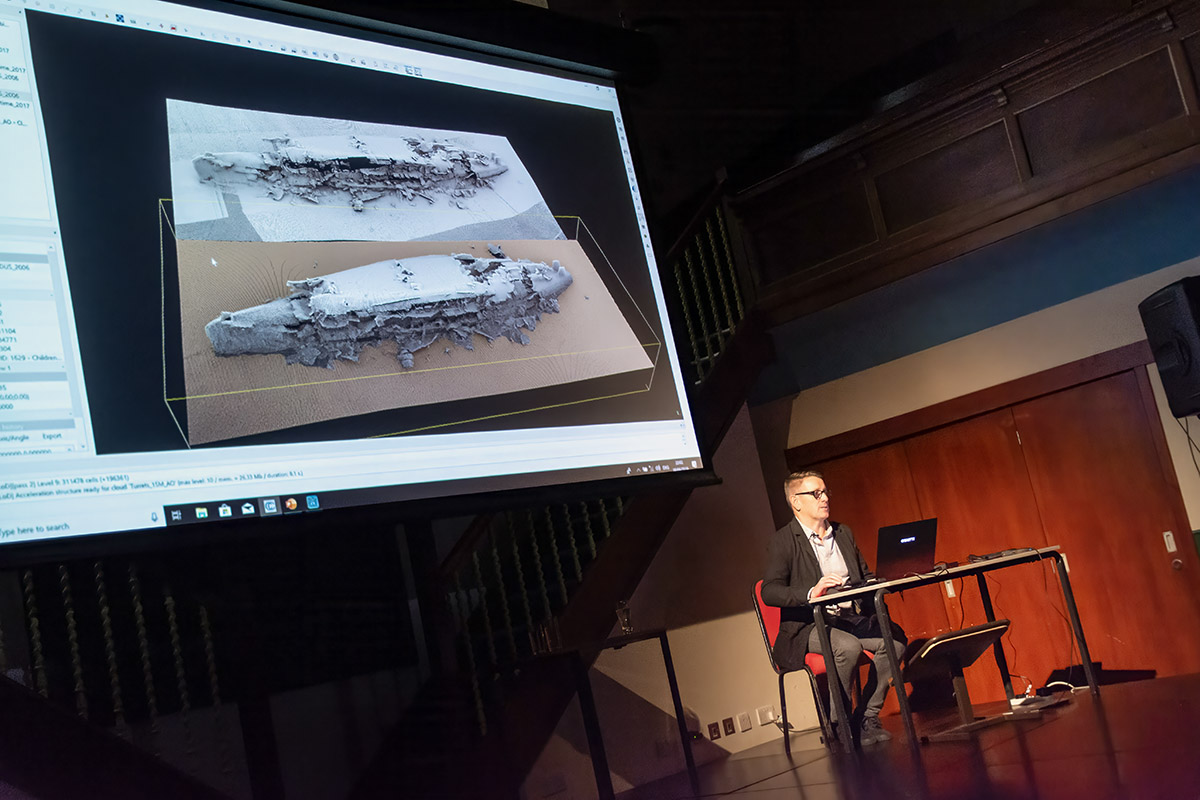
Scapa 100 team members Professor Chris Rowland and Kari Hyttinen gave a jaw-dropping glimpse of the wrecks as they are today using state of the art 3D models created using multibeam and photogrammetry technology. Of particular interest to divers in the audience was a discussion of the dramatic states of collapse that many of the wrecks had suffered in recent years. I’d noticed this myself only a day or so before when diving the SMS Karlsruhe – the previously intact stern section was almost unrecognisable from my last dive on her back in 2015!
"As the service came to a close, a team of divers from both the British Royal Navy and the German Navy descended down onto the wreck to place wreaths on her hull."
The Longest Day
As the sun rose across Scapa Flow on the longest day of the year, Scapa 100 reached the peak of commemorations with a schedule of events marking the day on which von Reuter’s fleet 'wiped away the stain of surrender' in one final, desperate act of defiance.

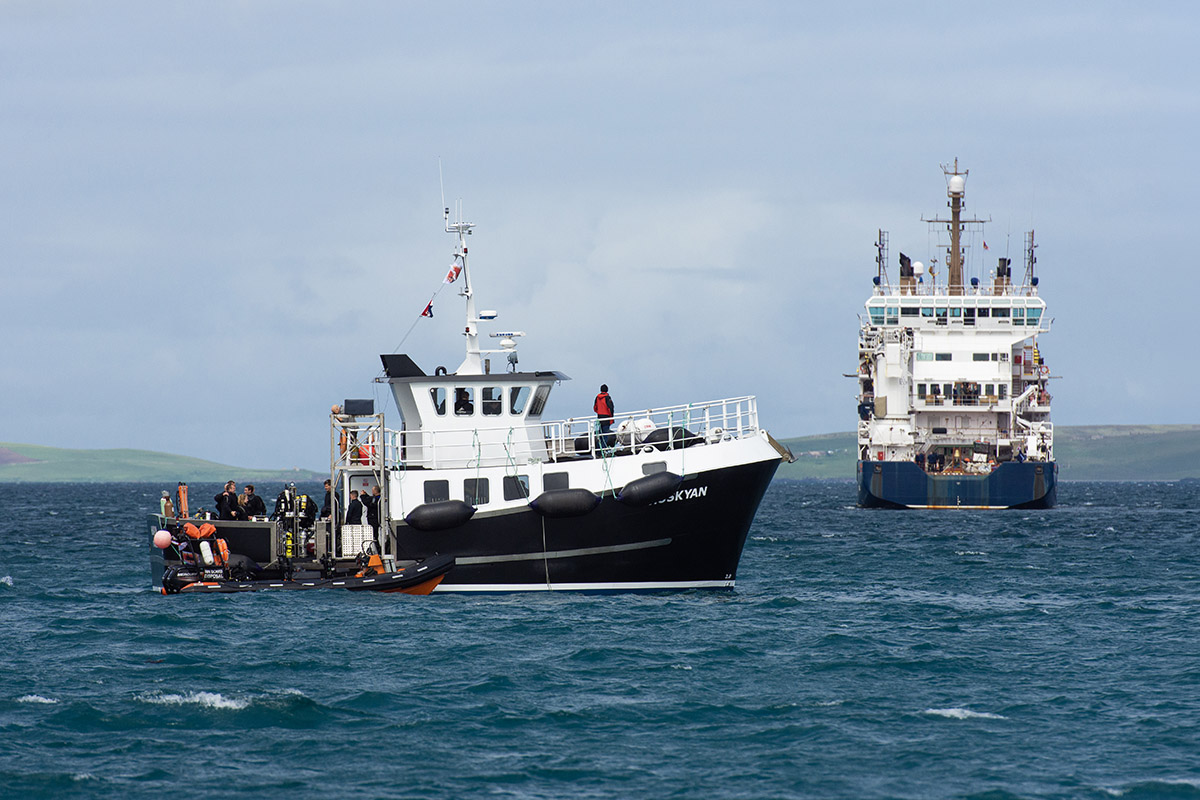
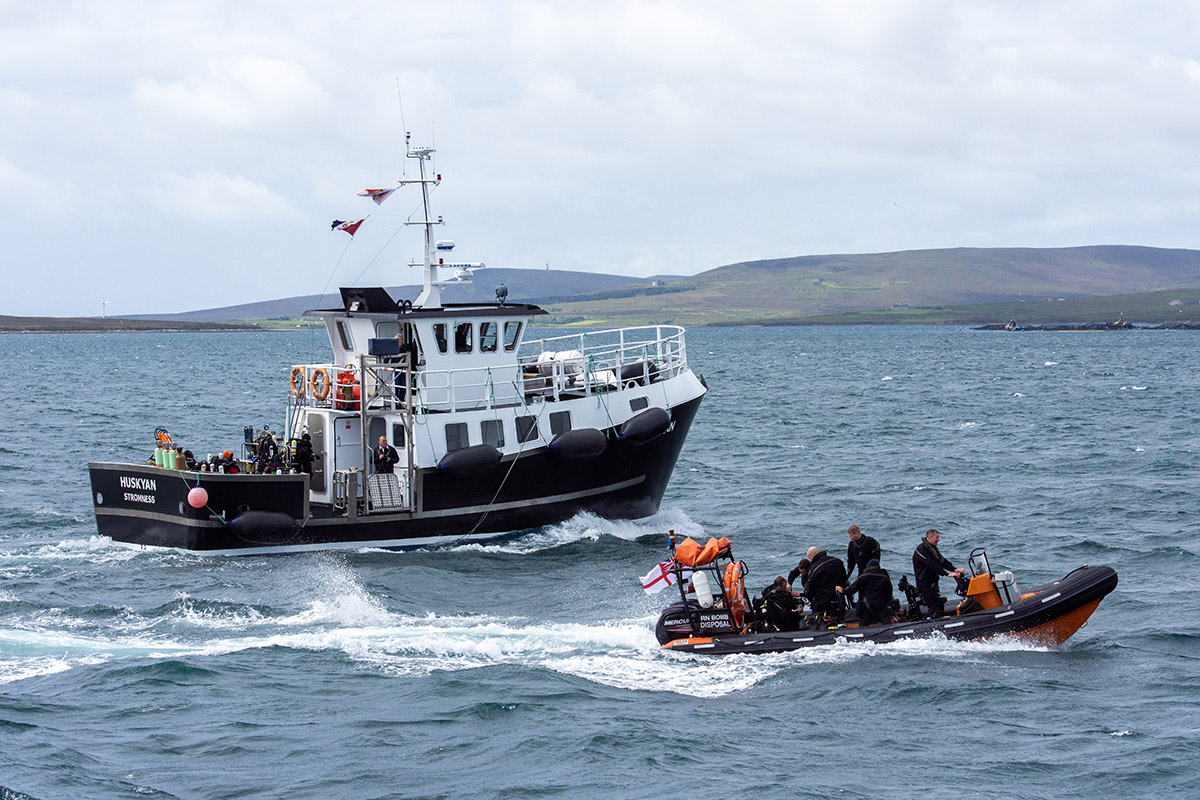
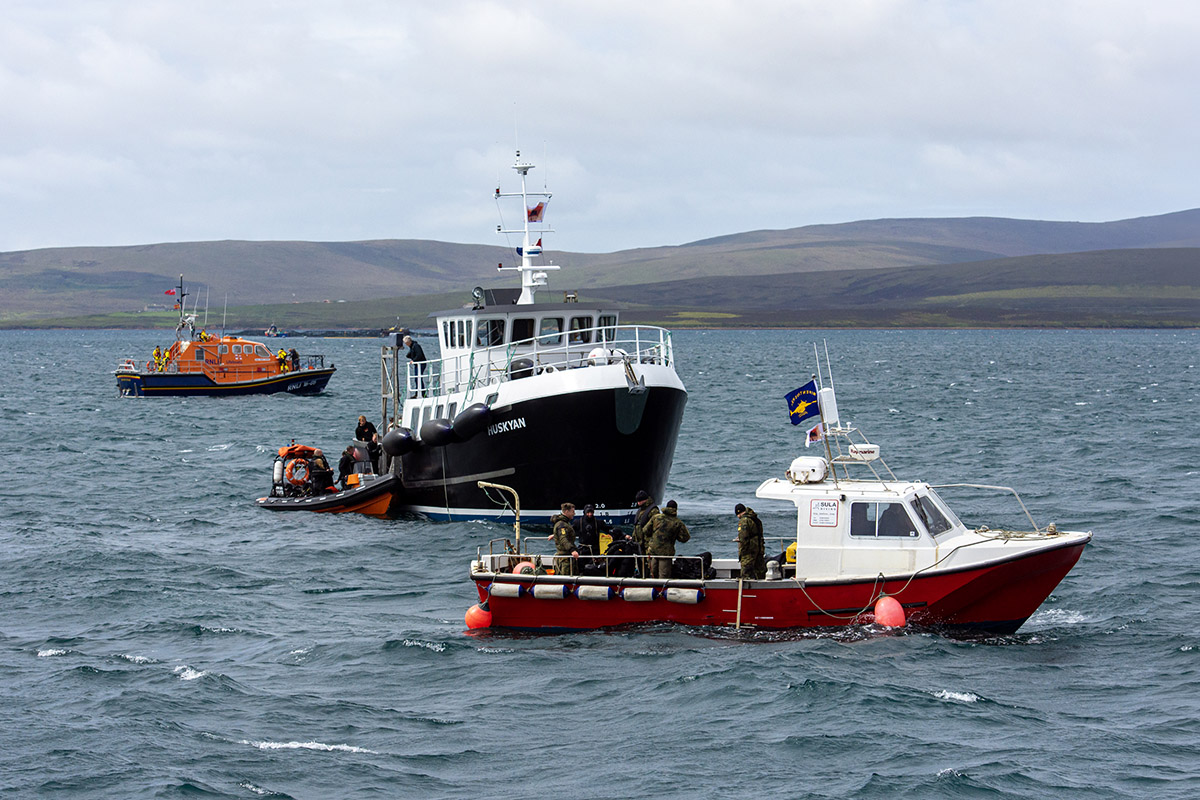
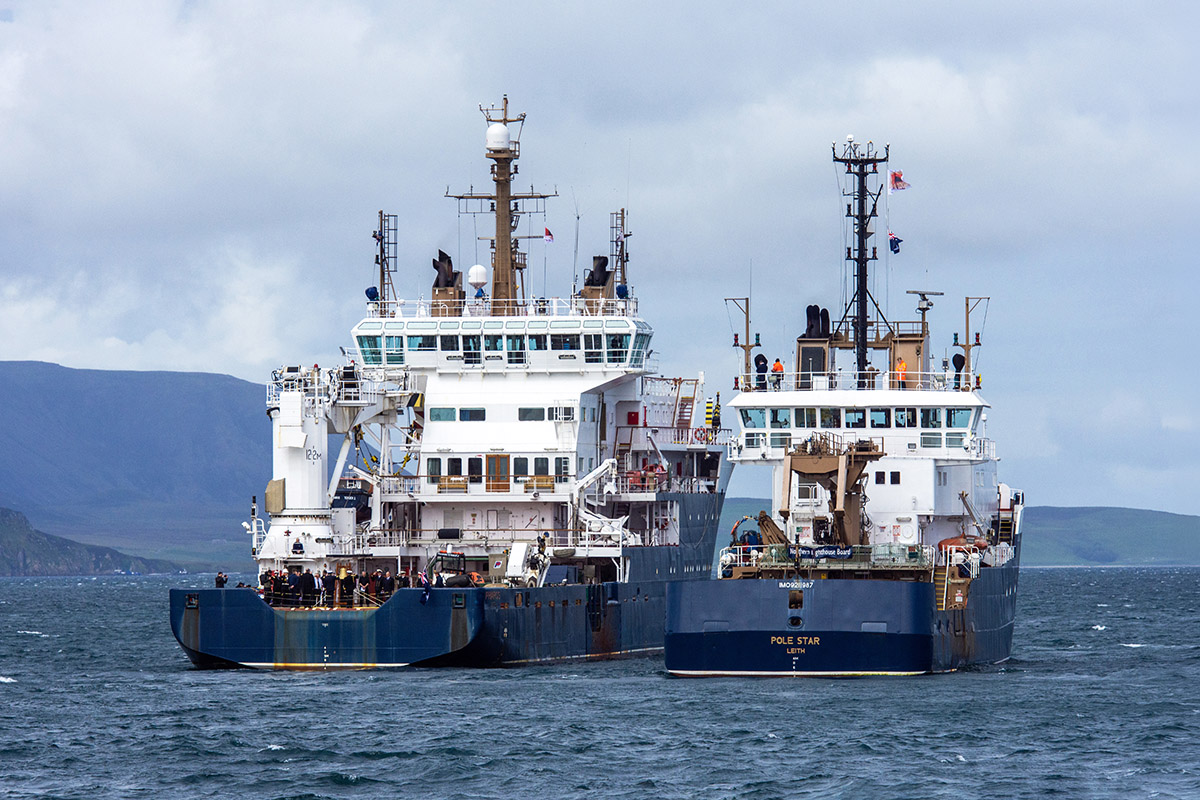
At 11am on Friday 21st June, a flotilla of diving hard boats, club ribs and commercial tender vessels assembled above the wreck of the light cruiser SMS Dresden II. With the eyes of the world's media looking on, the boats quietly held position above the wreck as a service of reflection broadcast across the VHF marine radio from the nearby Northern Lighthouse Board tender Pharos.

With dignitaries, descendants of the Germain sailors and representatives from both the British Royal Navy and German Navy assembled on her deck, the grandson of Rear Admiral Ludwig von Reuter rang the bell from the SMS Von der Tann – one of several battlecruisers of the German Kaiserliche Marine scuttled at Scapa Flow and raised from the sea bed during subsequent salvage operations.

Spirit of Reconciliation
As the service came to a close, a team of divers from both the British Royal Navy and the German Navy descended down onto the wreck to place wreaths on her hull. In a touching spirit of reconciliation and in recognition of the strong ties that now exist between these two modern-day NATO allies, the two navy divers shock hands underwater against the backdrop of a large flag of modern-day Germany fluttering gently in the light current.
Service of Remembrance
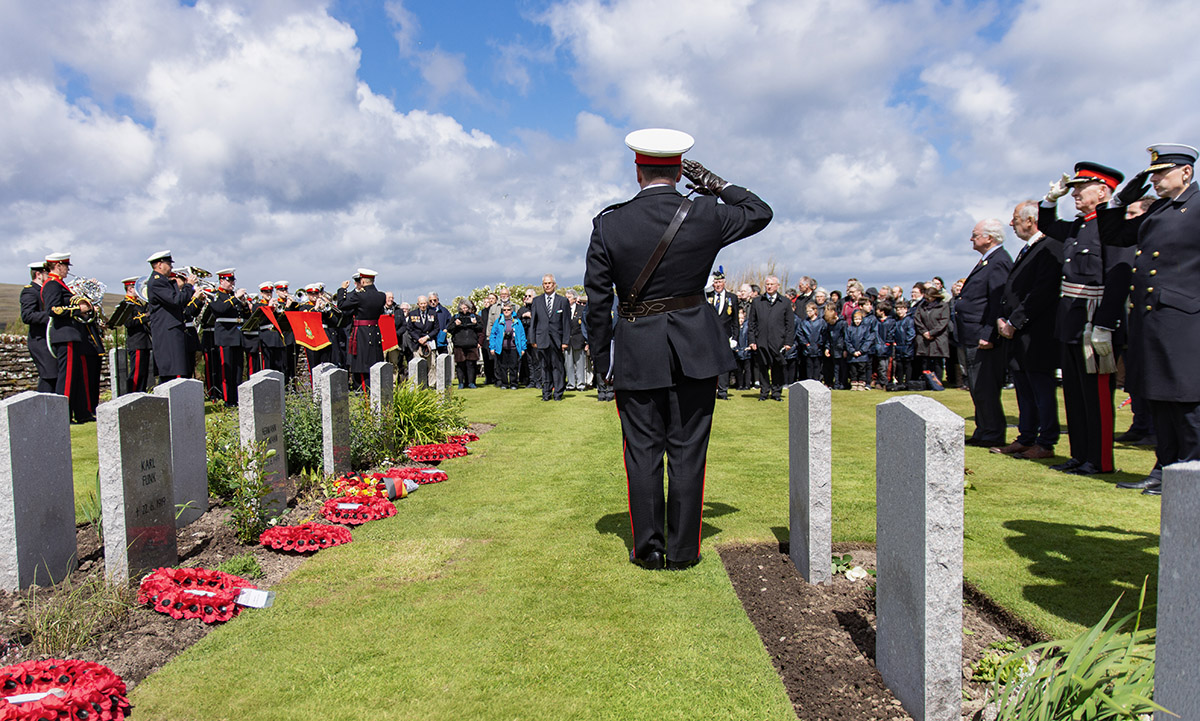
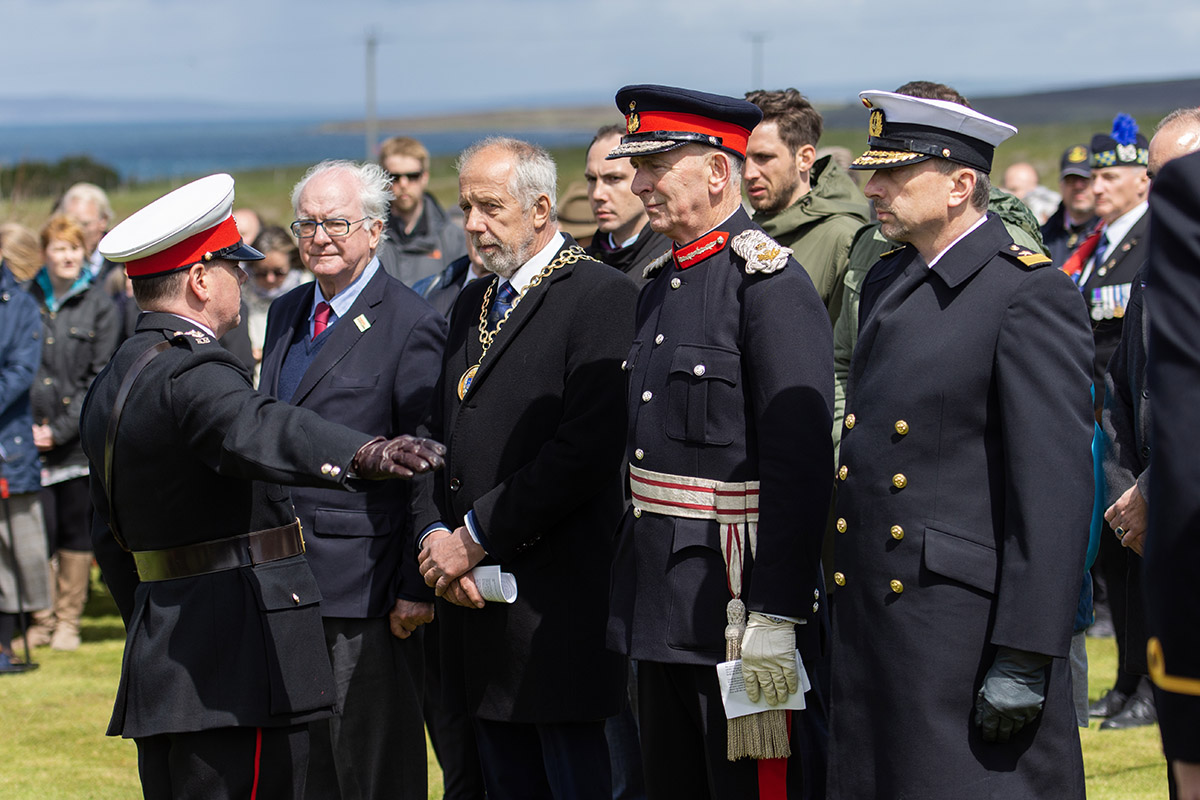
With the floating commemorations at an end, attention switched to the nearby island of Hoy for a service of remembrance for the fifteen German sailors at the Commonwealth War Graves Royal Navy Cemetery at Lyness. With many family members present including a number of Admiral von Reuter’s own descendants, the service was led by German Military Pastor Christoph Sommer, the Venerable Martyn Gough, Chaplain of the Fleet and Archdeacon for the Royal Navy, and the Rev. David Dawson, Chaplain to the local Sea Cadet Corps, the Royal British Legion Kirkwall Branch and Royal Naval Association Orkney Branch.

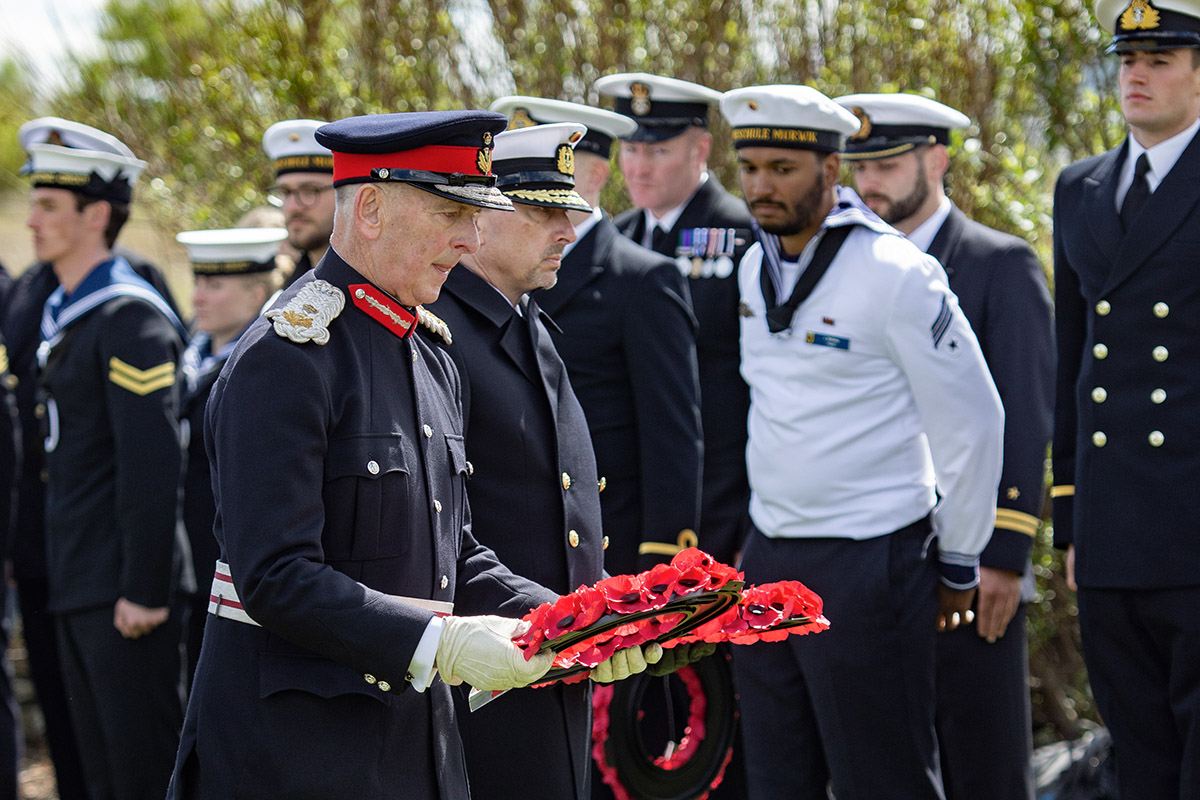
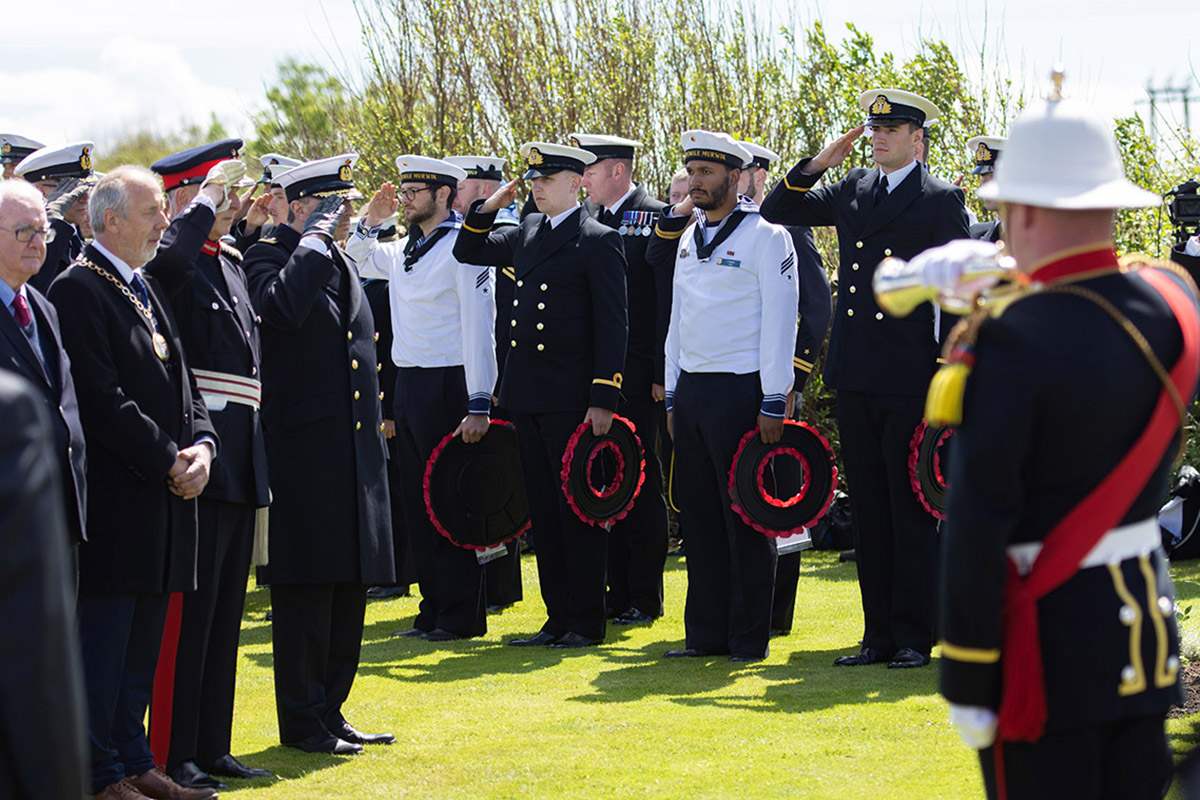
During the ceremony, wreaths were laid by Rear Admiral Stephen Haisch of the German Navy, and Captain Chris Smith, Royal Navy Regional Commander for Scotland and Northern Ireland along with local dignitaries including the Lord Lieutenant of Orkney, Bill Spence. In a heart-felt statement following the service, Rear Admiral Haisch gave his thoughts on the commemorations. "I am deeply touched by the heartfelt commemoration service that was organised by the people of Orkney."

"Commemorating what happened here 100 years ago also brings to mind how far we have come since those dark days. How from enemies we, the United Kingdom and Germany, have become true friends. Today, our nations stand side by side on the world stage, upholding the joint values we believe in."
Acknowledgements...
I'd like to extend a very special thank you to Orkney & Shetland Charters for making this trip to Scapa Flow possible. Their dive vessel MV Valhalla provides accommodation, catering, diving gas and all logistics, making it the perfect platform for exploring the shipwrecks of Scapa Flow.

This feature is dedicated to the memory of Helen Hadley, skipper of MV Valyrie and a dear friend. Helen was an irrepressible force of nature who's irreverent humour and energy made her so special to so many. Gone but forever in our hearts.
All content © Jason Brown 2010-2026
No content may be reproduced without express written permission.