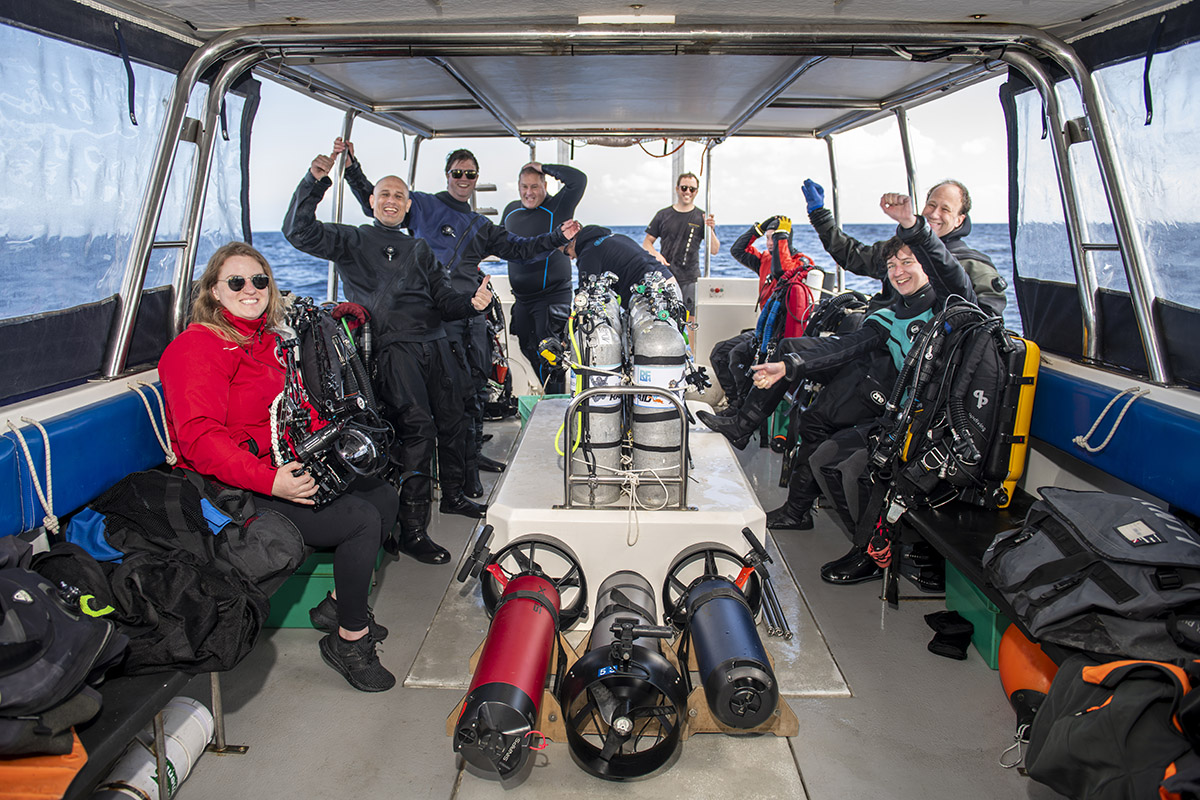
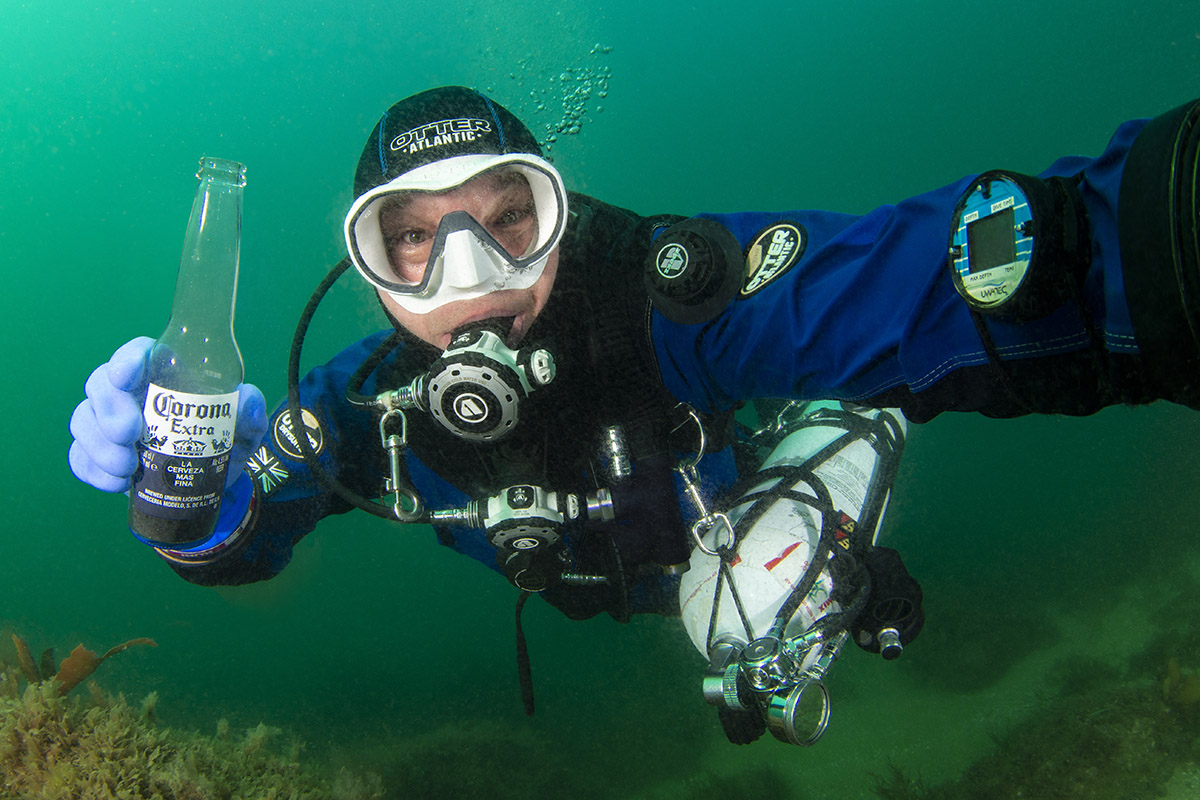
"Leaving the cylinders to fill, he took his family on a day trip, half expecting to return home to find no roof on his home!"
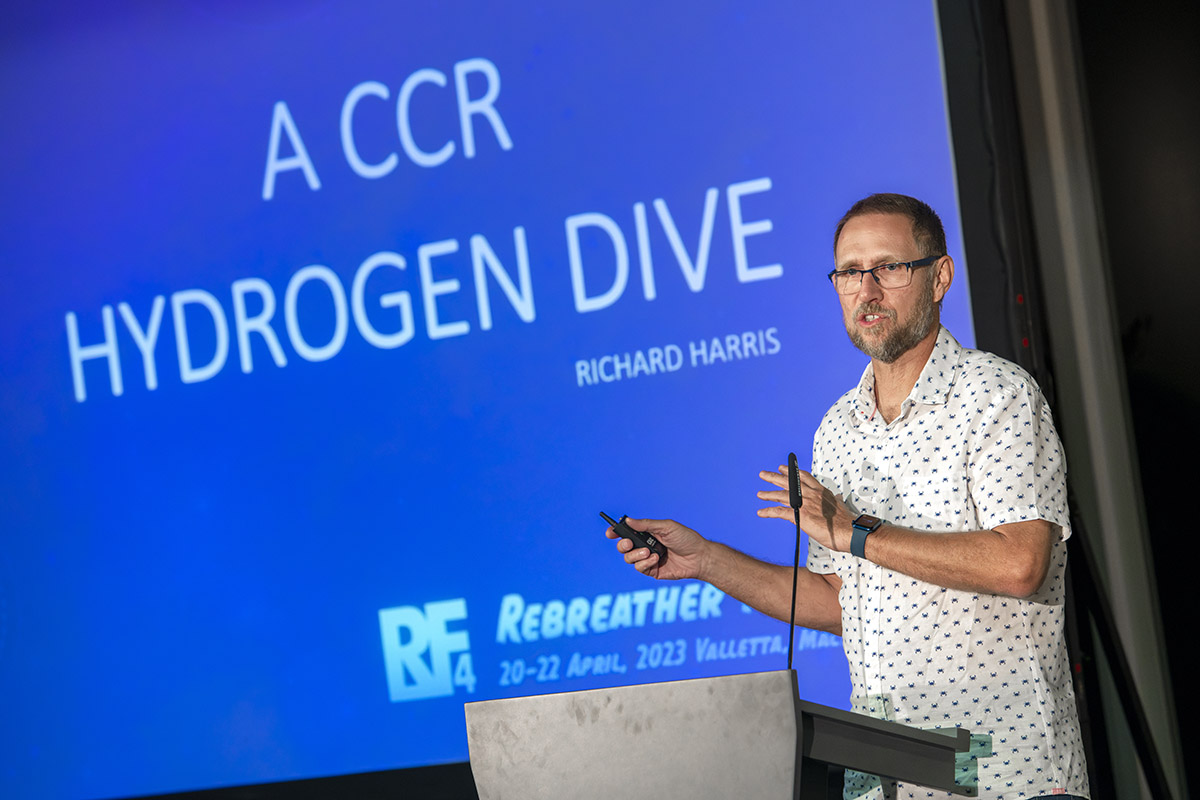
Throughout his jaw-dropping and often laugh-out-loud presentation, Harry’s motto ‘N=1’ was hammered home repeatedly – just because it worked once, doesn’t mean it will work again. Those with even a rudimentary understanding of gases will appreciate that mixing two highly explosive gases like oxygen and hydrogen isn’t something to be attempted lightly.
With his signature Kiwi grin, Harris recounted how he’d first attempted to mix the two gases by placing his rebreather into his outdoor swimming pool. Leaving the cylinders to fill, he took his family on a day trip, half expecting to return home to find no roof on his home!
Helium alternative?
Hydrogen is a very light gas – it has half the density of helium – which makes it an attractive alternative breathing gas for dives below 200 metres. Lower gas density means lower work of breathing which, in turn, means lower CO2 production and a reduced risk of oxygen toxicity – all things that you certainly want at depth.
How Harris’ body would react to the hydrogen was unknown – high pressure nervous syndrome (HPNS), inner ear DCS, decompressing from hydrogen, respiratory stress and bail out complications were all potential risks he could have encountered.
Those not fortunate enough to have attended Rebreather Forum 4 will be pleased to learn that every presentation has been made freely available to view online. For any diver interested in the cutting edge of diving science and technology, these recordings of each and every presentation are a gold mine of invaluable knowledge. Check out the links above to access them! Plans are already afoot for the next Rebreather Forum likely to occur in 2028. Watch this space!




 CONNECT