Home About Portfolio Photo Library Articles & Features
SEARCH
The Ghost fleet of Scapa Flow
Scotland may not be the obvious choice for world-class wreck diving but the sheltered anchorage of Scapa Flow in the Orkney Islands offers something totally unique – the opportunity to dive the shipwrecks of the German High Seas fleet of World War One. Jason Brown set out to dive their sunken remains...
Diving the shipwrecks of the
German High Seas fleet...
Life is full of bucket list stuff that we never quite manage to tick off – despite our best efforts, some experiences in life just seem destined never to happen.

Until now, the one thing on my bucket list that continued to elude me was a trip to Scapa Flow – the famous last resting place of what remains of the German High Seas fleet that dared to challenge the dominance of the Royal Navy. In one of the most dramatic events of World War One, Scapa Flow bore witness to Imperial Germany’s last proud act of defiance as 74 warships deliberately scuttled as the Royal Navy looked on in horror.
Feature Details
Author:
Jason Brown
Publication Date:
October 2018
Publication:
Canadian DIVER
Feature catagory:
Shipwrecks
Photo Gallery #1:
Photo Gallery #2:

This feature and all images are copyright © Jason Brown and may not be republished, reproduced or copied in any form without the express written permission of the author. This feature and all images are available to licence.
In the closing days of World War One, Scapa Flow in the remote Orkney Islands would play an important role in the final chapter of what many at the time believed to be ‘the war to end all wars’. Under the terms of the Armistice signed on the 11th November 1918, Rear Admiral Ludwig von Reuter led a fleet of 74 warships of the German Imperial Navy into internment at Scapa Flow to await the outcome of peace talks. In June of the following year, these talks would result in the signing of the Treaty of Versailles, marking the end of the bloodiest war the world had ever witnessed.

A dive into History...
Despite the signing of the treaty, all would not go smoothly for the allies. On the 21st June 1919, von Reuter mistakenly believed that peace talks had collapsed. Fearing that the allies would attempt to capture the vessels and turn them against Germany, he gave an order that would go down in history – the mass scuttling of the German High Seas fleet under his command. In a final act of defiance, over fifty warships sank to the bottom of Scapa Flow as the Royal Navy looked on in horror. To date, the scuttling of the German High Seas fleet remains the greatest loss of shipping recorded in a single day.

As the years past, the majority of von Reuter’s fleet would be raised in one of the greatest salvage operations in history. Today, only seven of the 52 ships remain on the sea bed but they still offer some of the best wreck diving you’ll find anywhere on the planet. Scapa Flow continues to attract divers from across the globe, drawn by the promise of battleships and cruisers armed to the teeth and ready for war. Beyond the allure of all these terrible weapons of war, Scapa offers something far more profound - a glimpse into a moment in history that rocked the world. They mark a day on which the German Imperial Navy that had posed such a powerful threat to the allies during so many years of global war drew its last defiant breath. What remain are lasting, poignant reminders of a war that would shape the world for generations to come.
"Located approximately 10 miles off Scotland’s northern coastline, Orkney is a wild and rugged archipelago of islands that are as breath-taking as they are remote."
Located approximately 10 miles off Scotland’s northern coastline, Orkney is a wild and rugged archipelago of islands that are as breath-taking as they are remote. Travelling to Orkney is relatively easy with direct flights to and from North America available from Glasgow and Edinburgh. By far the easiest route is via Aberdeen with a ferry crossing to Kirkwall, the capital settlement on the Orkney Islands. From there you can hire a car or simply jump on a bus for the short trip to Stromness. Alternatively, many visitors choose to embark from Scrabster – Scotland’s most northerly mainland port. The ferry from Scrabster will deposit you directly onto the quayside in Stromness where Scapa’s many charter boats operate from.

Arrival in Stromness...
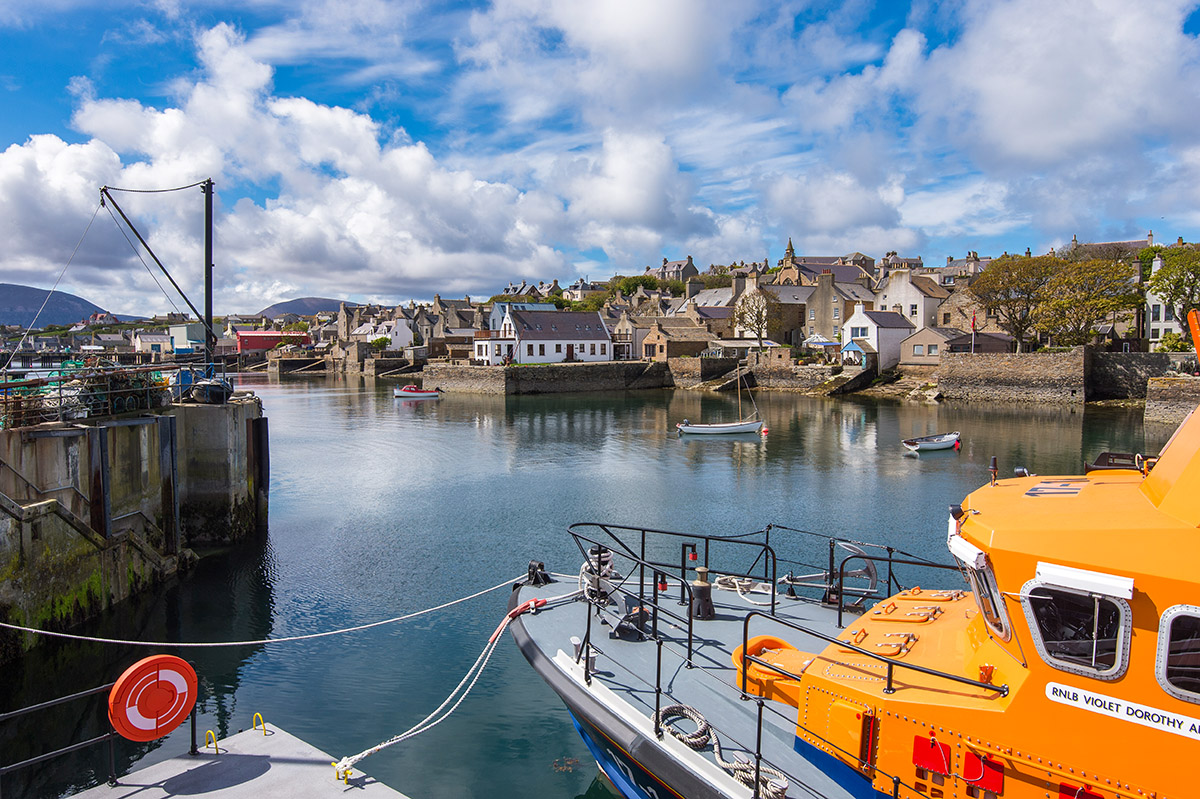
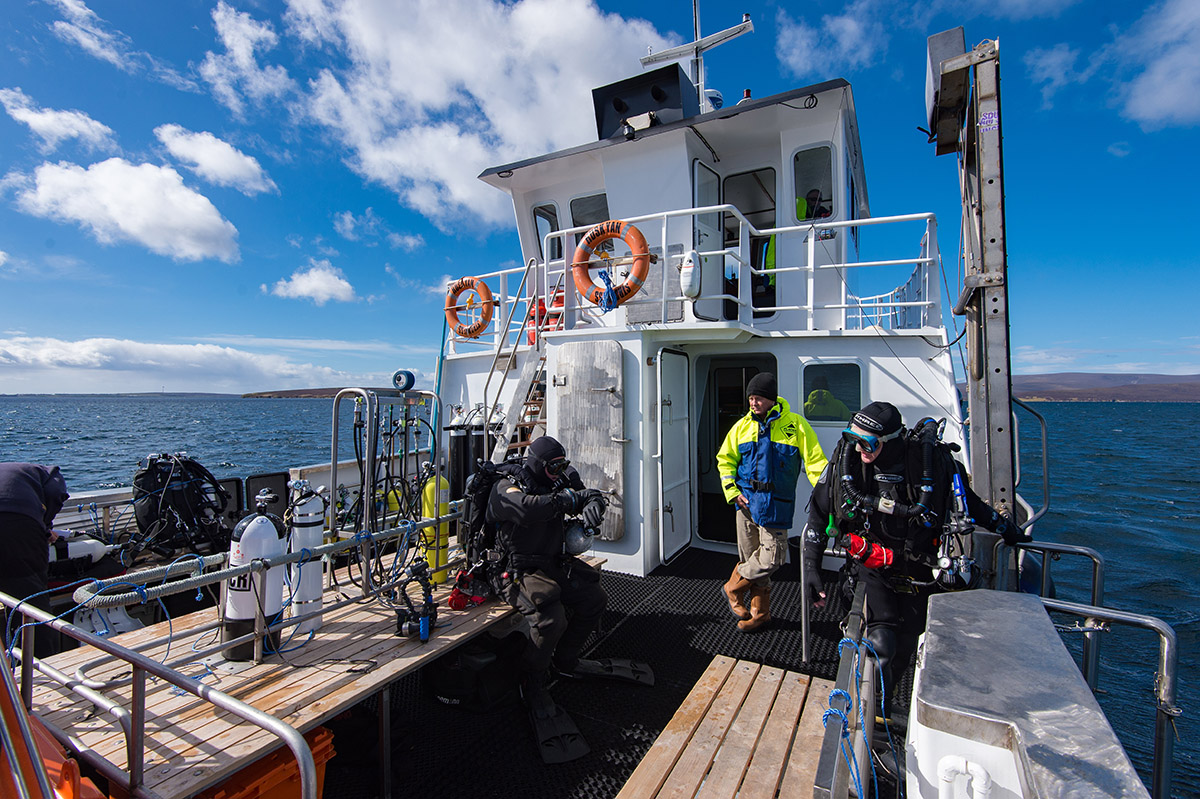
Stromness is a picturesque little fishing village that is now home to a fleet of dive boats and liveaboards that serve the never-ending supply of divers seeking to satisfy their rust for lust. Most of the boats that work Scapa Flow tend to be converted fishing trawlers but our base for the week was to be the most recent arrival in Stromness – the MV Huskyan. Built from the ground up for the sole purpose of diving, Huskyan is a very solid metal-hulled dive boat that boasts every conceivable gadget and mod-con a diver could wish for. From its large open rear deck with ample kitting up space and wide divers lift to the comfort of its galley complete with flat screen TVs and heated changing area, you can’t help but feel just a little bit spoilt.

Perhaps Huskyan’s greatest asset, though, is her skipper, Emily Turton. If Emily’s cooking doesn’t impress you – the crumble cakes with vanilla cream are to die for – her encyclopaedic knowledge of the wrecks and their history will leave you in no doubt that Emily knows her stuff. Before each dive, Emily took us through the history of each wreck – from it’s contribution to the German war effort through to its sinking and the effects of later salvage operations – and, of course, the features worth looking out for on our dives. Dive briefs onboard Huskyan are quite a high tech affair with Emily digitally scribbling over 3D multibeam models of the wrecks shown on two large flat screen monitors.
Whilst the wrecks of the German High Seas fleet may be the headline act in Scapa Flow, there’s a lot more wrecks that can be dived both inside and on the edges of the flow including the famous ‘Blockships’ deliberately sunk across key channels to prevent German U-boats from entering the flow during both wars. If you can tear yourself away from the headline wrecks, The Tabarka is particularly a visit. Now resting in the strong tidal entrance to Burra Sound after her sinking in 1944, the fast currents that sweep through the channel nourishes an abundance of colourful life that plasters the wreck. For visiting photographers, her ribcage-like remains make for some superb photo opportunities!

Shakedown on the Dresden
We started our Scapa adventure with a visit to the SMS Dresden, a light cruiser that now lies on her port side on a sloping seabed with her bow in 82ft (25m) of water. Often the first of the German fleet that visiting divers will experience, the Dresden makes a perfect 'shakedown' dive. That’s not to say that she doesn’t have a lot to offer – no visit to the Dresden would be complete without the obligatory photo next her signature feature, the impressive shield on her bow. Moving further along, it's clear that the wreck is slowly deteriorating with a large section of the deck peeling away from the hull to reveal the inner workings of the ship.

Next up we moved onto the Dresden’s sister ship, the SMS Karlsruhe. The Karlsruhe is the most accessible of all the wrecks with her hull rising up to within 40ft (12m) of the surface. Although she’s suffered the most from extensive salvage work with large sections of hull literally ripped and blown apart, she’s still makes for a fantastic dive. Photographers will love her very picturesque stern and the many large breech-loading naval guns arranged along her 367ft (112m) length.
"We were lucky enough to be ‘buzzed’ by a playful seal on at least one of our dives and large shoals of fish sweep past you at every turn..."
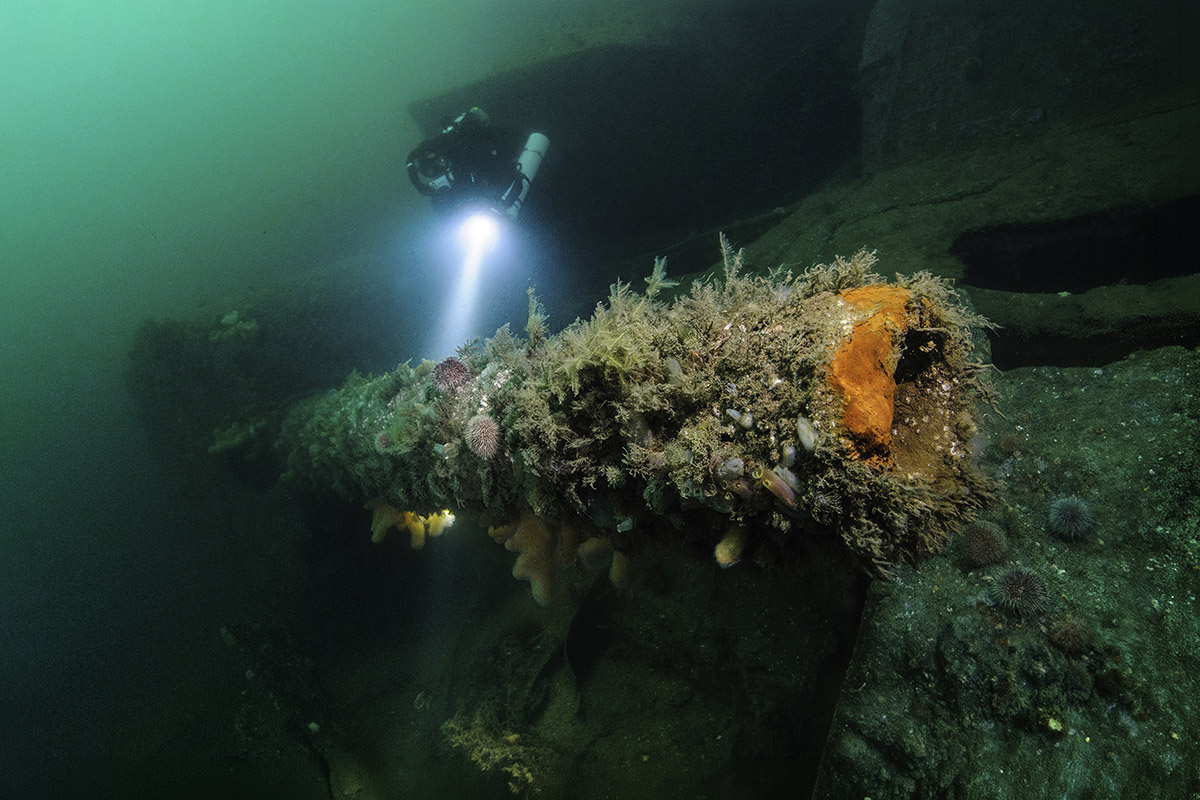
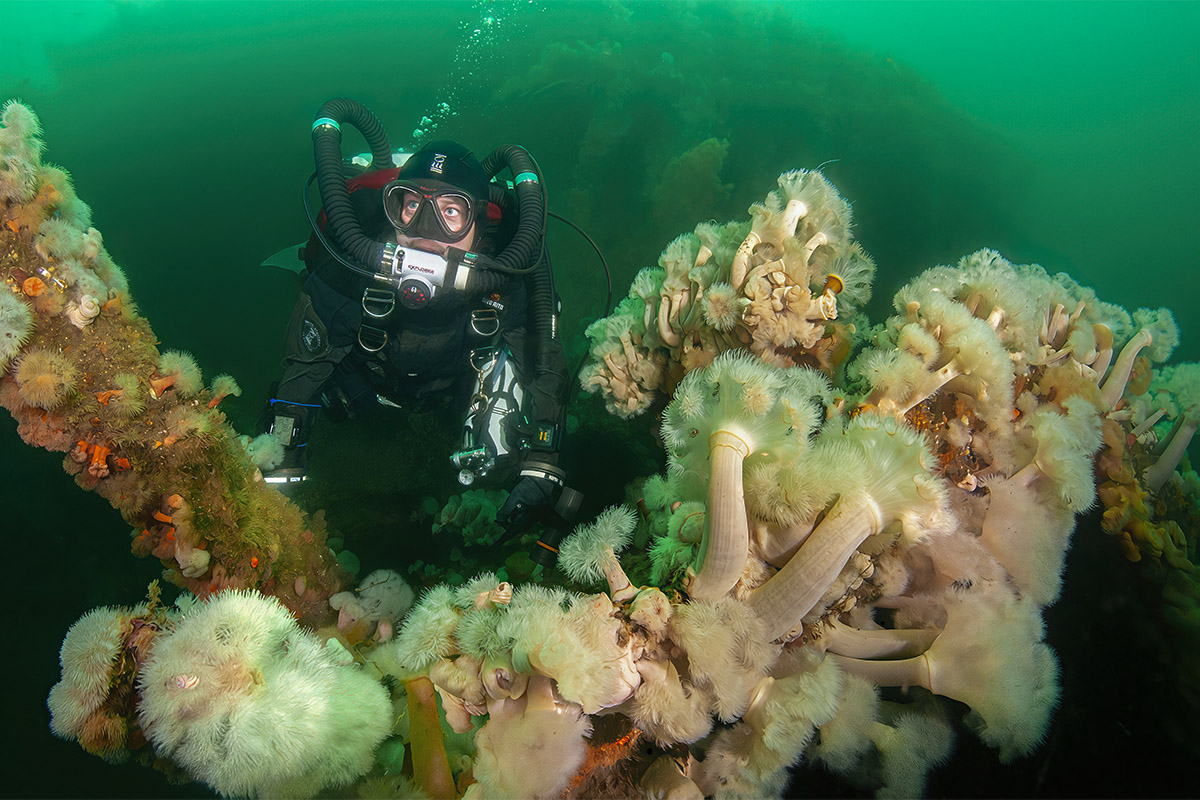
Let’s be honest – it’s the big guns that attract divers to Scapa Flow and the Karlsruhe has more than her fair share. That’s not to say that fans of marine wildlife will be disappointed – the Karlsruhe is also one of the prettiest dives in Scapa Flow with much of her superstructure covered in beautiful plumose anemones and a carpet of brittle starfish. There’s a lot of life to be seen in and around the wrecks too – we were lucky enough to be ‘buzzed’ by a playful seal on at least one of our dives and large shoals of fish sweep past you at every turn.

Adding to our tally of High Seas wrecks, our next dive was on the SMS Cöln which, like the Karlsruhe, has suffered from extensive salvage work near her stern. Like her sister ships, the Cöln has plenty to offer but two features you should not miss are her range finder (minus the optics – the Germans didn’t want these falling into British hands so they were removed before her internment) and a beautiful brass torpedo tube that still remains in place next to a 5.9-inch deck gun. Quite how this solid lump of brass was overlooked during salvage operations remains one of the great mysteries of Scapa Flow!

Signal from the past...
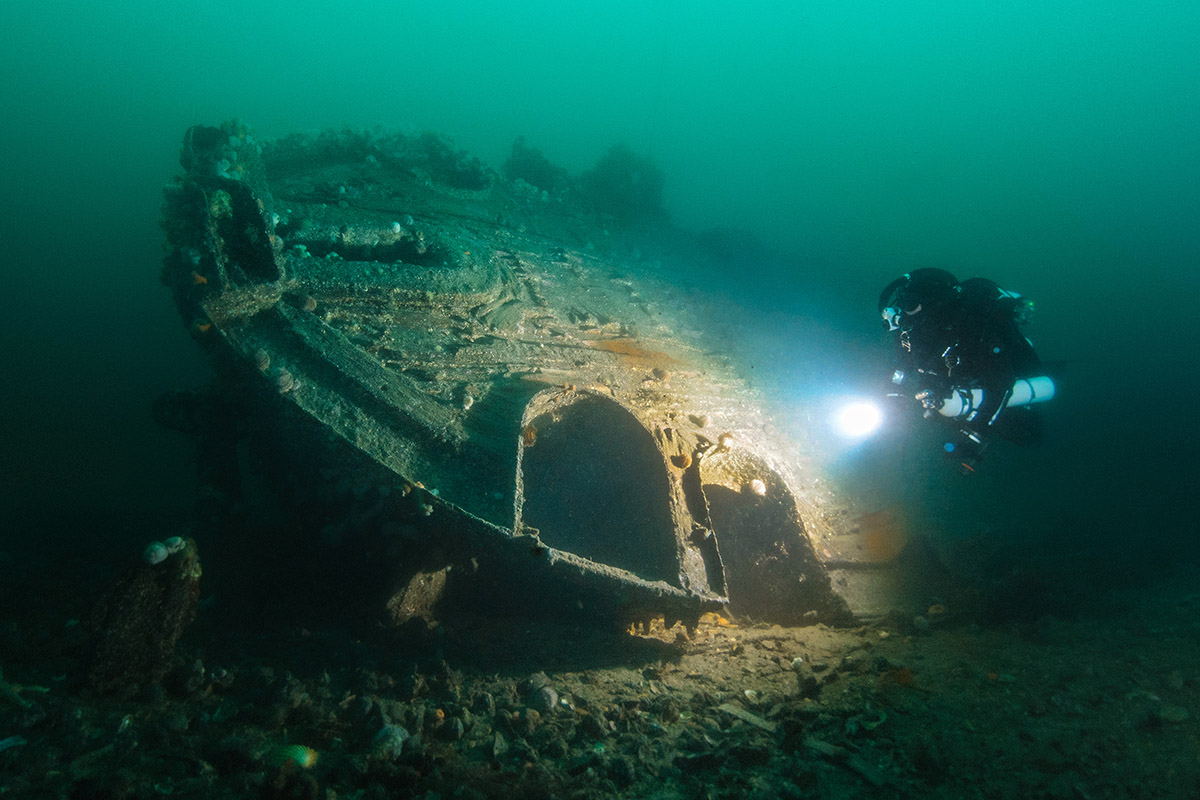
If you get the chance, make sure you take in at least one dive on the smallest of the seven wrecks – the German minelayer, SMS Brummer. Lighter in construction, she’s fared considerably worse than the rest of the fleet with large sections of inner hull exposed to the outside world. Nowhere is this more evident than her bow – the upper sections of hull are all but gone, leaving nothing more than a sweeping scythe-like framework.

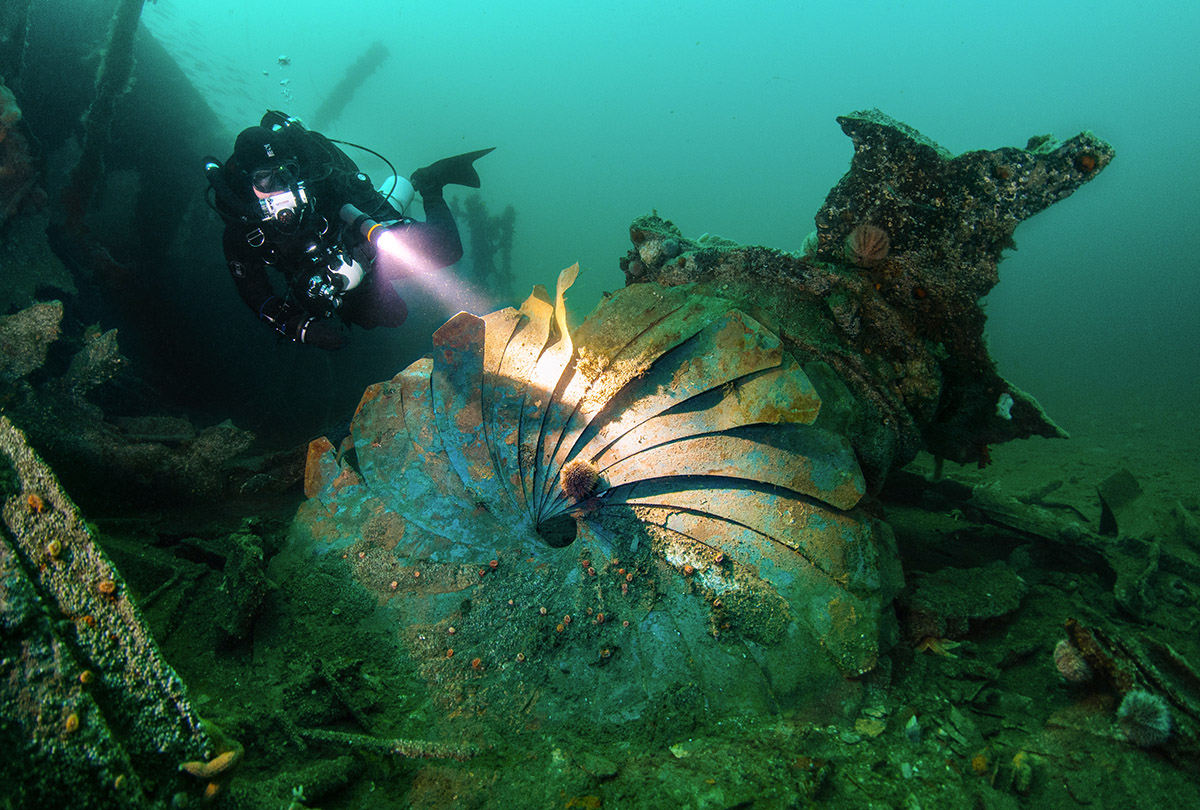
Still in surprisingly good condition is a large search light that now lies broken open on the seabed. Unique to the Brummer, the fragile bronze blades of the search light's iris should not be missed although care must be taken not to touch them – the whole structure really is that fragile! Look but do not touch or you'll have a very angry skipper to answer to.
"Our first battleship was to be the mighty Kronprinz Wilhelm – a lumbering dreadnought armed to the teeth for the sole purpose of waging war..."
You sank my Battleship!
No visit to Scapa Flow would be complete without paying your respects to the three big kahunas – the Battleships SMS König, Kronprinz Wilhelm and the mighty Markgraf. All three saw action during the pivotal Battle of Jutland – the largest naval battle of World War One - so it is perhaps a little sad that these lumbering Dreadnoughts should have ended their days in the way they did. Thankfully, their untimely demise did have one positive outcome – they make for fantastic diving!

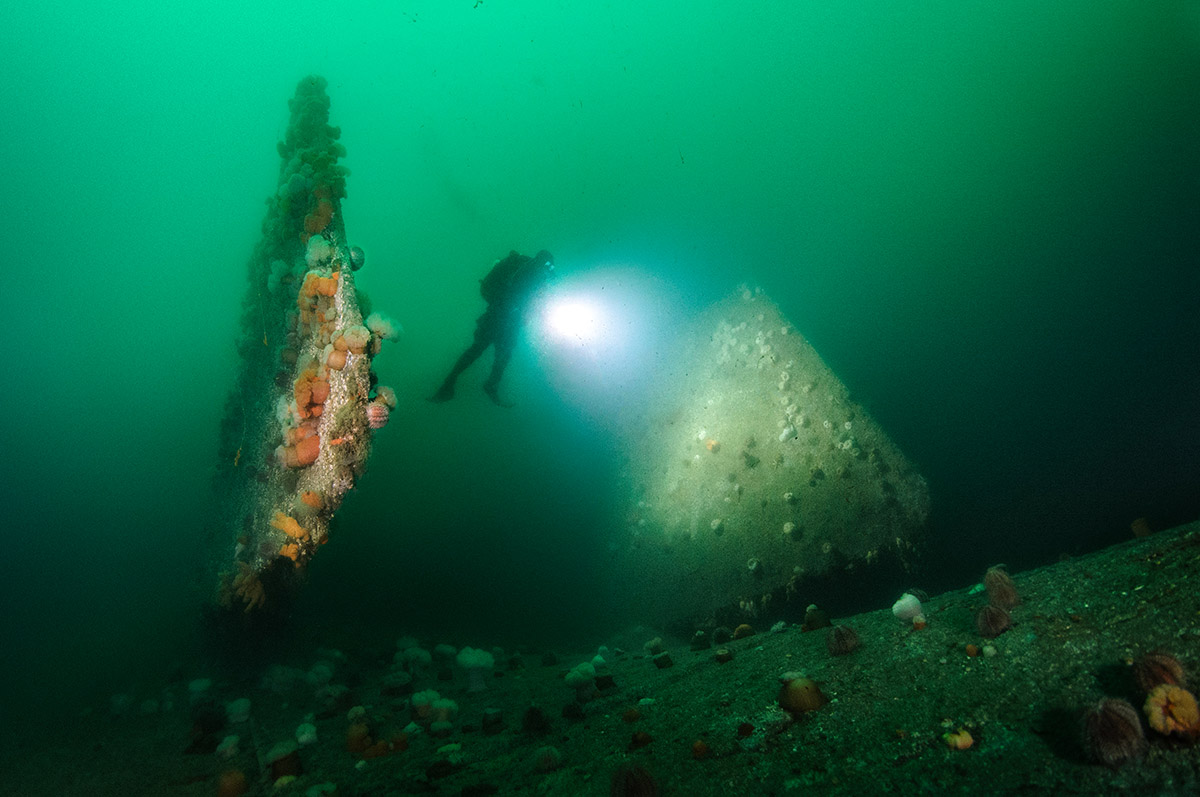
Our first battleship was to be the mighty Kronprinz Wilhelm – a lumbering dreadnought armed to the teeth for the sole purpose of waging war. With her hull reaching within 40ft (12m) of the surface, she’s the shallowest of the three battleships so is often the first to be visited. Like most battleships, her top-heavy design saw her ‘turn turtle’ as she slipped beneath the waves and she now lies upside down with a slight list to port. Thankfully there’s still plenty to see including the humungous 12-inch main guns that poke out from under her upturned starboard-side hull at a depth of about 120ft (37m). Her large observation tower is well-worth a visit too.

Barbettes and boilers...
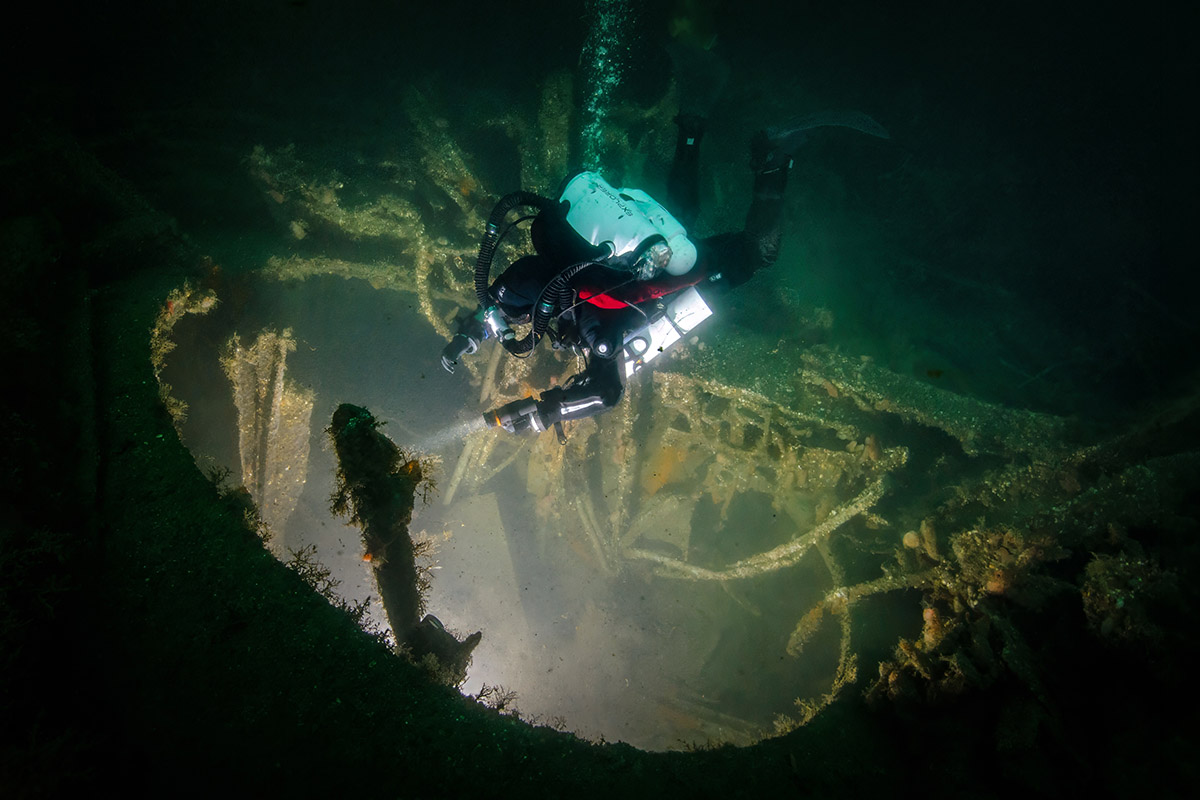
With our taste for battleships spurring us on, our next dive was to be the Kronprinz' sister ship, the SMS König. A veteran of the battle of Jutland, the König lies in 131ft (40m) of water off the island of Cava. Although her stern has suffered extensive damage from blasting, the remains of one of her two rudders can still be seen rising up from the hull. Exploring the wreckage exposed by salvage work, the Konig provides a fascinating glimpse into the inner structure and workings of such a collosal vessel of its time. Worth a visit at the remains of a large low-pressure turbine located near one the ship's Schulz-Thornycroft boilers. Look out too for a large, circular hole approximately 2.5 metres wide. This is the bottom of the barbette for D-turret within which the housing for a pair of massive 12-inch main guns would have seated.
"The diving isn’t difficult – most of the German fleet are well within recreational diving limits and can safely be dived on a single cylinder."
Deeper into the Markgraf...
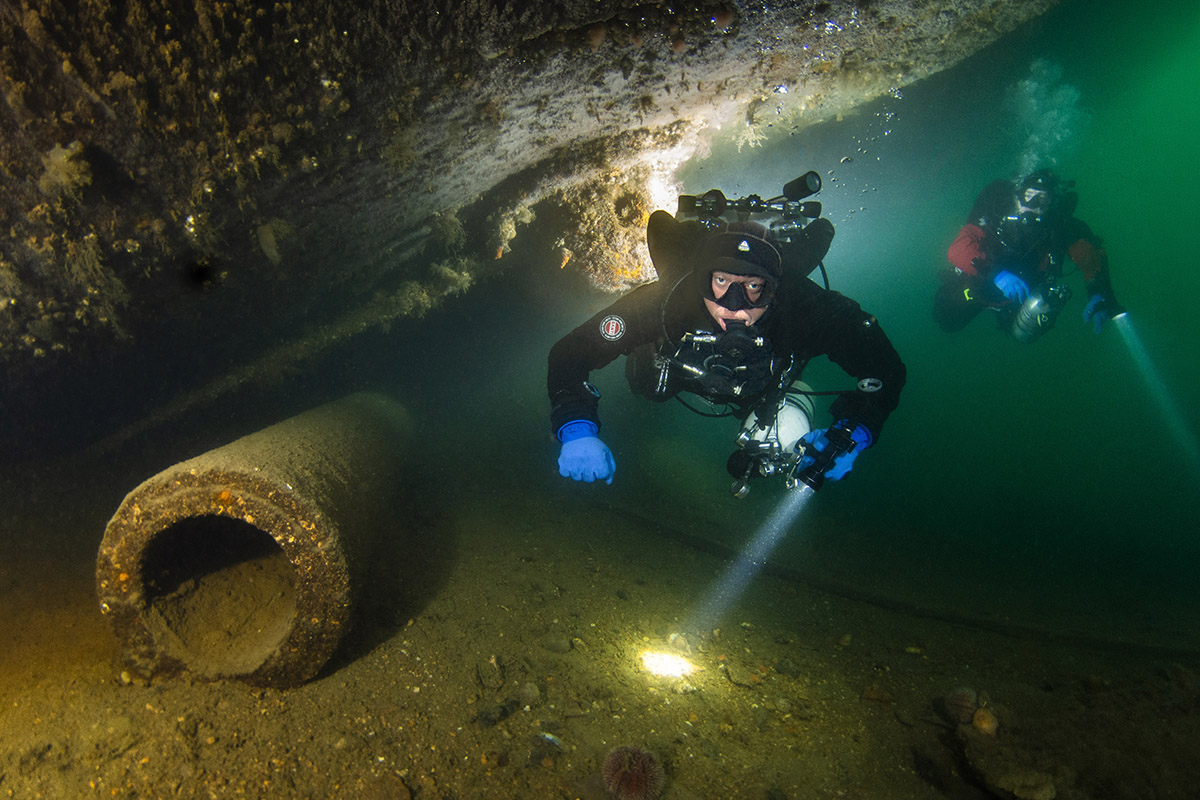
The deepest of the three battleships is the SMS Markgraf which – like its fellow König-class battleships – lies upside down at a maximum depth of 148ft (45m). She is probably the only one of the seven high seas fleet wrecks that is beyond the range of single-cylinder recreational divers – I’d certainly recommend a twinset or closed circuit rebreather to dive her safely. As she is completely upside down, most divers concentrate on taking in the shear scale of her hull which really hits home when you swim between her massive twin rudders that stand almost 13ft (4m) proud of the upturned hull!

If you get the chance of a second dive on the Markgraf, I’d highly recommend taking in her stunning bow too – dropping down to the seabed at 148ft (45m) and looking straight up along the vertical line of her bow really gives you an idea of the shear scale of this sleeping behemoth. For divers happy to rack up some deco, there’s plenty to see along the seabed including casemate guns and portholes to the officer’s accommodation.

Is Scapa right for you?
With six solid days of diving complete and all seven of the German High Seas fleet wrecks added to my log book, my visit to the Orkney Islands was over. Looking back, it’s safe to say that Scapa Flow isn’t for everyone – you really do need to be comfortable diving in temperate waters so a drysuit is a must. That said, the diving isn’t difficult – most of the German fleet are well within recreational diving limits and can safely be dived on a single cylinder. A twinset or rebreather will certainly help to maximise your time on the wrecks – especially if you’re comfortable with a little deco – but far from essential. When the weather is playing ball, the conditions within Scapa Flow are relatively benign too with surprisingly good visibility and very little current to contend with.
Historic Insight
Not all the wreck action takes place under water when you visit Scapa Flow. Located on the east coast island of Hoy in the small village of Lyness, no trip to Scapa Flow is complete without a visit to the Scapa Flow Visitor Center and Museum. There’s a good chance that whatever charter boat you dive with, you’ll get to visit this thought-provoking attraction as most dive boat skippers build a quick stop-over at Lyness into their itineraries. Surface intervals don’t get much better than this.

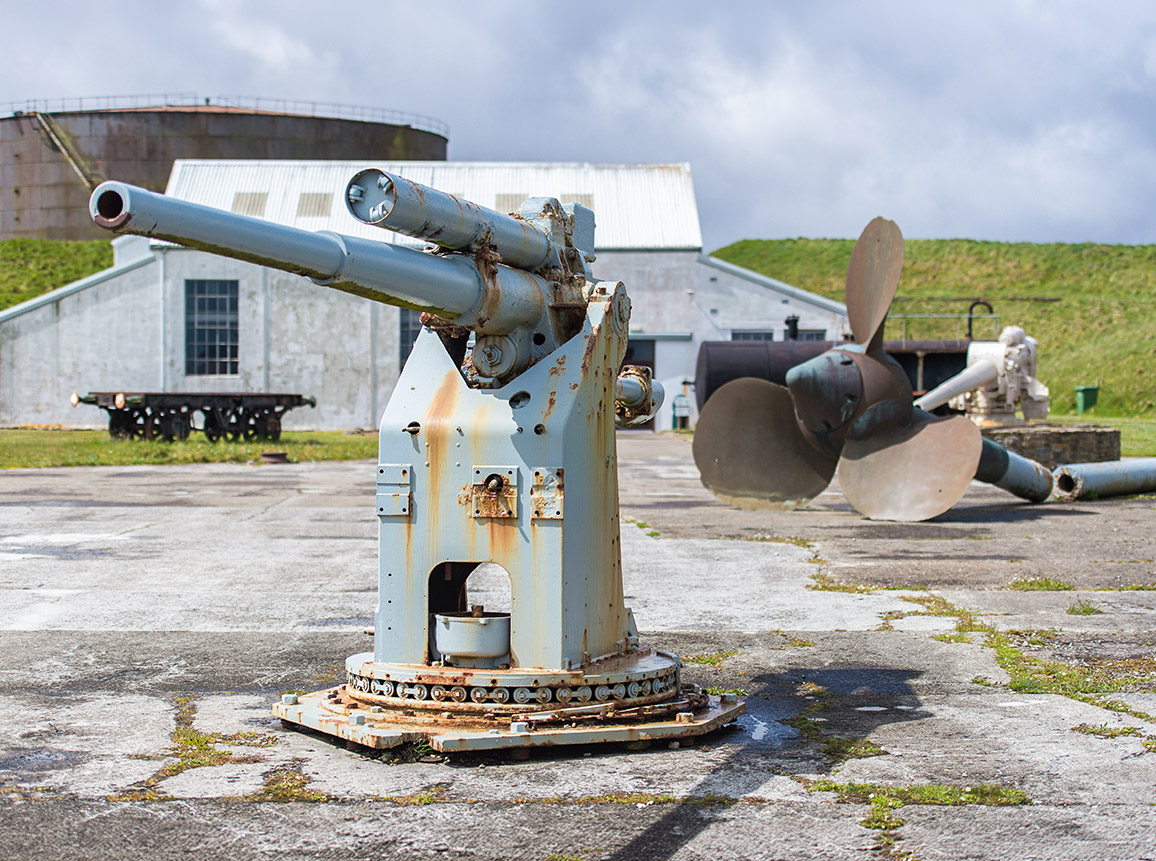
The Visitor Centre and Museum is home to an impressive array of artefacts including many lifted from both the German High Seas fleet and British Royal Navy wrecks in the local area. Walking around the museum gives a fascinating insight into Scapa Flow’s role in both World Wars – here you’ll find massive breach-loading guns, ships bells, torpedoes and so much more.

The museum also houses key artefacts from three other significant naval events that left their mark on military history – the loss of HMS Hampshire which lead to the death of Lord Kitchener in May 1916, the loss of HMS Vanguard in July 1917 and the sinking of the Royal Navy’s Revenge-class battleship HMS Royal Oak in October 1939. Designated by the British Government as controlled sites, all three wrecks are off-limits to visiting divers so this is as close as most of us will ever get to them.
Wild and Unspoilt Beauty
Once your diving is complete, I’d highly recommend that you stay on for a few extra days to explore Orkney's topside attractions. Orkney has a rare to find, unspoilt quality – it's wild and untamed scenery is breathtakingly beautiful and is home to some of the oldest recorded Neolithic settlements and standing stones that pre-date Stone Henge by thousands of years.

Where ever you venture on Orkney, there are signs of the island's rich and diverse history – from the ornately painted Italian Chapel on Lamb Holm to the Kitchener Memorial at Marwick Head which looks out across the stormy seas to the last resting place of the ill-fated HMS Hampshire, Orkney is a rugged gem that will leave a lasting impression on you for many years to come.

All content © Jason Brown 2010-2026
No content may be reproduced without express written permission.