Home About Portfolio Photo Library Articles & Features
SEARCH
Pandora's Box of de(Lights)
The humble back up light is an essential part of any explorer’s kit configuration but it’s rarely the focus of blue-sky thinking. Could it be time for it to enjoy a bit of innovation? Jason Brown takes a look at a couple of new models with some clever tricks up their sleeve.
Product Review - Pandora K1
series backup lights...
“Keep it simple, Stupid” – that’s been the guiding principle behind much of the dive gear we’ve come to know and rely on.

Pioneered by US Navy boffins back in the swinging sixties, the ‘KISS’ principle states that most things in life work best when we keep things simple rather than overcomplicating for the sake of it. You certainly can’t argue with the logic – the simpler something is, the less likely it is to go wrong, right?
Feature Details
Author:
Jason Brown
Publication Date:
September 2025
Publication:
InDepth Magazine
Feature catagory:
Product Review
Photo Gallery #1:

This feature and all images are copyright © Jason Brown and may not be republished, reproduced or copied in any form without the express written permission of the author. This feature and all images are available to licence.
It's fair to say that ‘keeping things simple’ has served us well over the years. It’s acted as the cornerstone of much of the equipment and configurations we now take for granted. From the wing, backplate and harness configuration on our backs (thanks Bill) to the design of the humble Jetfin, much of the kit we rely on to bring us safely ‘home to mamma’ represents the very embodiment of the KISS principle – clean and minimalist with the design and functionality of every component thought through to a level of obsessiveness usually deserving of a strait jacket.

Keeping things simple...
It's not all sunshine and rainbows, though. Some would argue that the KISS principle has led to stagnation in innovation for certain product types. Backup lights are a good case in point. As anyone who has gone through the meat grinder of cave training will attest, deeply entrenched dogma remains amongst many within this intensely risk-aware sector of the diving community. Maybe this isn’t necessarily a bad thing – the ‘if it aint broke, don’t fix it’ mantra holds true when the kit you’re using is so mission critical. Cave diving already offer more than its fair share of exciting opportunities to shuffle yourself off this mortal coil should things ever go wrong.

Back when I took my cave class, we had it drummed into us that the best backup light was the simplest backup light – a no-thrills ‘twist-activated’ design with robust construction and a focused under-driven bulb offering long burn times, powered by good old dependable non-rechargeable C (LR14) dry cell batteries. Even today, there are plenty of divers out there that will swear blind that using rechargeable batteries within a backup light is akin to leaving your safety spools in the back of your truck. It just isn’t done. When the proverbial hits that fan lurking at the bottom of every incident pit, you need to know that your backup lights won’t fail you. Good old-fashioned dry cell batteries, they claim, offer the reassurance of a predictable lifespan and decay – they’ll fade slowly rather than going from bright to dead within minutes.
"Isn’t it time that the humble backup light enjoyed a little bit of innovation too? Korean light manufacturer Pandora Lab seems to think so."
The poor reputation of rechargeable batteries was certainly justified back in the day - NiCD battery technology was notoriously bad at self-discharging quickly and then there was the dreaded ‘memory effect’ to deal with each time you stuck them on charge. NiMH had similar issues with self-discharge, but things have thankfully moved on - the development of stable lithium-ion batteries has mitigated the shortcomings of older rechargeable battery types.

Li-On batteries are now far more reliable and – more importantly – predictable. It’s this predictability that has made them a popular choice in modern exploration-grade primary lights like the Halcyon Focus and Flare series. They also drive the electronics within our rebreathers so it’s a bit of a stretch to claim that they’re not suitable for life support equipment, surely?

Think different...
Which all begs the question - Isn’t it time that the humble backup light enjoyed a little bit of innovation too? Korean light manufacturer Pandora Lab seems to think so. Their new K series lights offer some tantalising headline features that could be just what the market needs to kick-start some long-overdue innovation – all without sacrificing the all-important mantra of ‘keeping things simple’ in key areas. Could it be time to reassess all those long-held preconceptions of what makes a great backup light? Maybe so.

So who are Pandora Lab? Chances are they’re not a brand that many will be familiar with, but they’ve built a solid reputation for ‘thinking different’. Savvy divers will recognise the Pandora Lab name through one of their more unassuming products – the Pandora Tool. This nifty little widget replaces a toolbox-full of screw drivers, Allen wrenches and c-spanners with a pocket-sized ‘does it all’ tool that fits perfectly in a set of wetnotes. Think of it as the Swiss Army Knife of dive tools and you won’t go far wrong - there’s even a bottle opener on there!
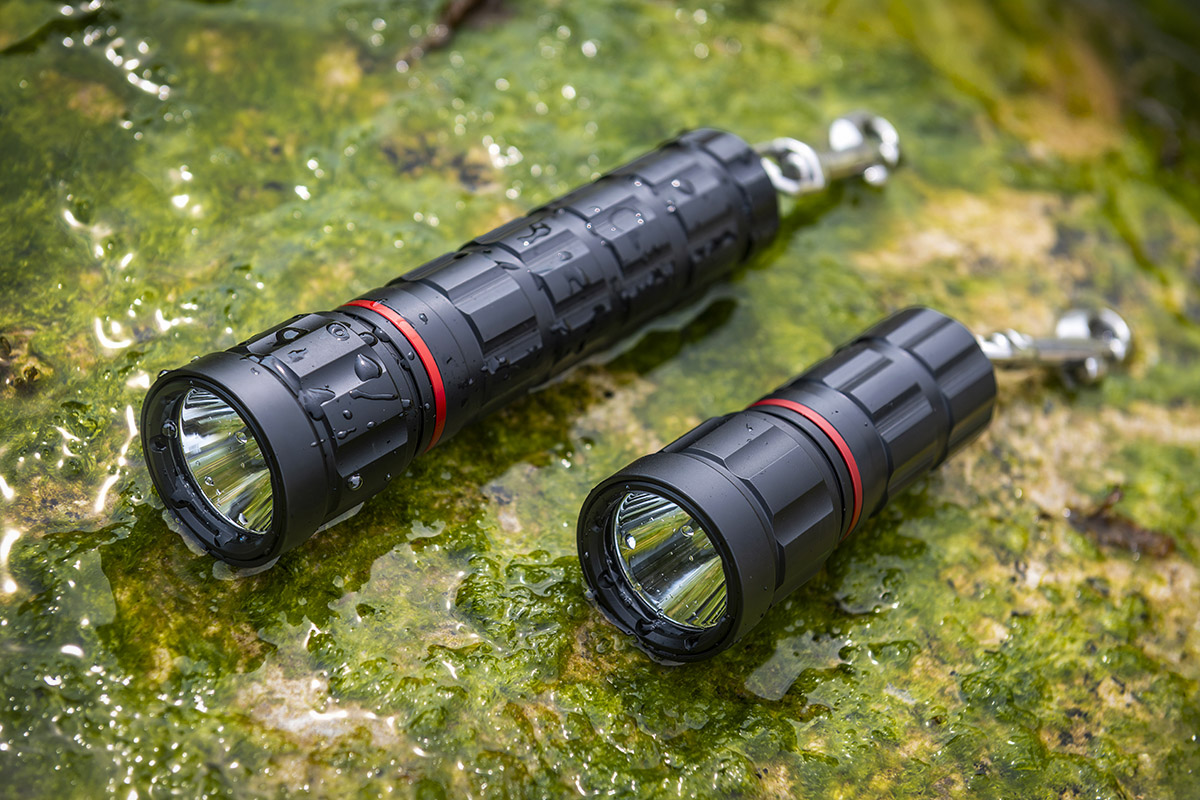
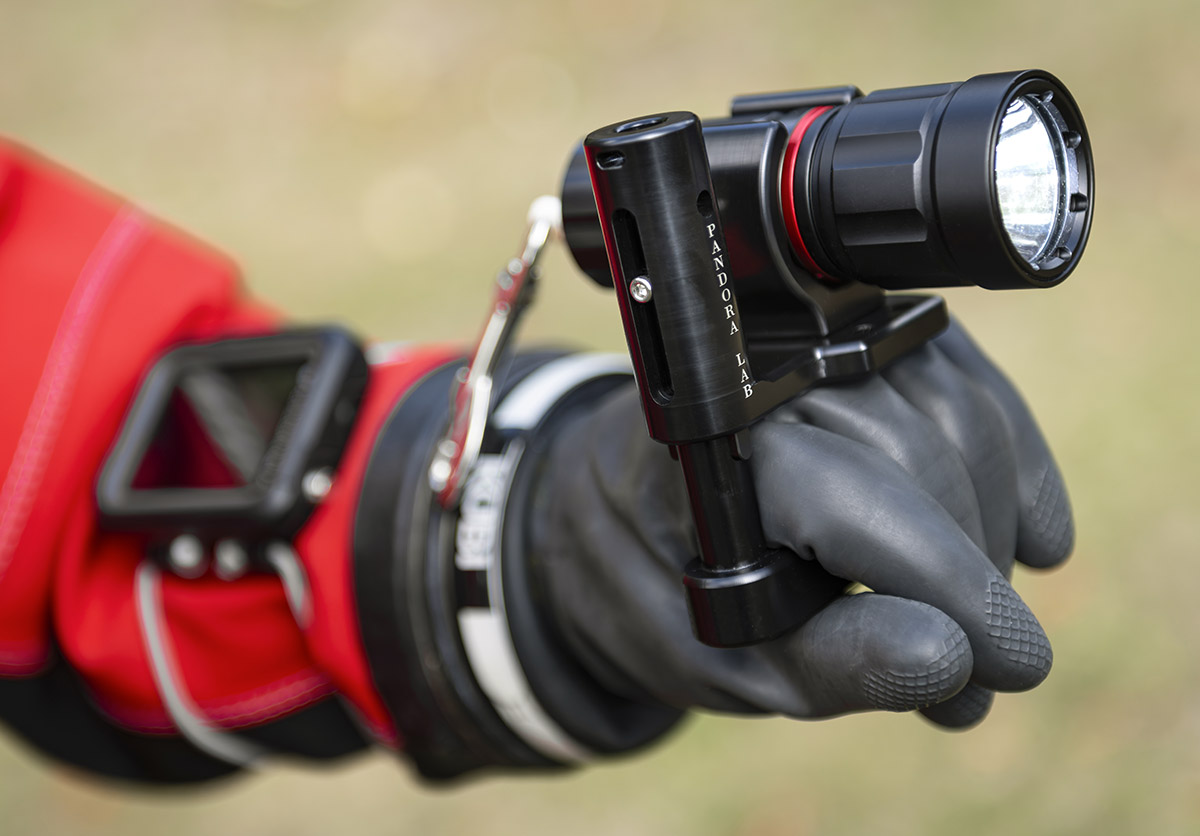
Shifting things up a gear, Pandora’s latest innovation is the K series, a range of dive lights that include the two models that we’re going to be shining a light on here – the K1 Mini and the K1 Rescue. Like the rest of the K series, the Mini and Rescue are modular in design with interchangeable heads and even the option of easy conversion into full blown primaries complete with umbilical cable (either straight or 90 degrees for you sidemount types) and an obligatory Goodman handle. Modularity isn’t something that you’d expect to see in a backup light so this ‘outside the box’ thinking is an interesting innovation in itself. As we shall discover though, it’s not the headliner – there’s plenty of other good stuff to come from these innocuous little lights.

Tactical look & feel...
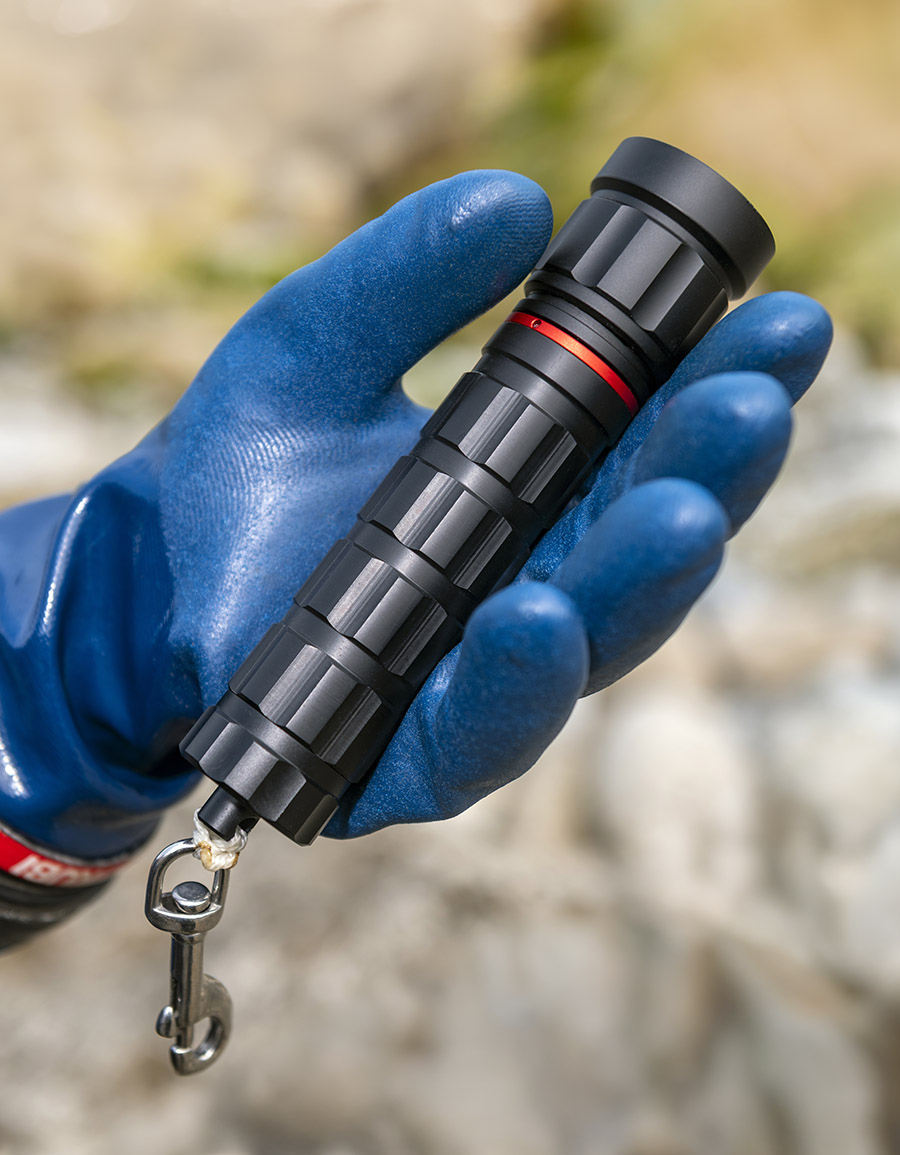
Unboxing either of the two K1 models on test, the first thing that strikes you about them is their build quality. Sporting a ‘tactical’ look and feel with a contoured body pattern similar to the classic Halcyon Scout light, both models provide a reassuringly tactile grip even in bulky dry gloves. The black stealth look is broken up by a stylish red ring around the neck of the light head which adds a nice flourish to the design. Like most backup lights, the base of both lights features a milled attachment point for a bolt snap. How you attach a bolt snap is up to you – for most, an ‘old skool’ length of cave line does the trick nicely.

Both lights are made from two primary materials - the main body is machined from a solid piece of Delrin whilst the light head is made from milled aluminium. The choice of these materials delivers a depth rating of 200m (656 ft) – more than enough for most divers, I suspect. In addition, the lights feature an integrated metal heat sink sleeve within the delrin body which surrounds the battery compartment. As well as completing the electrical circuit, this clever feature first seen in the Heser backup lights popular in Europe has a fringe benefit – it uses the heat generated by the LED head to maintain an optimal operating temperature around the battery via thermal conduction. Battery capacity is temperature dependent and can drop in low water temperatures so it’s great to see that Pandora have included this within their design.
"Pandora have taken things a step further by creating a light head that features all the same sealing but with a unique head design that can survive a full flood."
Things move up a gear with what is without doubt the K1’s keynote innovation – the sealed head design. The use of LED drivers within backup lights is nothing new but Pandora have taken things to the next level with an innovative design that offers something that anyone who has ever flooded a backup light will welcome – a sealed water-resistant head. Whilst other light manufacturers focus solely on reducing the likelihood of a flood using multiple o-ring seals and extended threads, Pandora have taken things a step further by creating a light head that features all the same sealing but with a unique head design that can survive a full flood.

Should the unthinkable occur, all is not lost - you can restore the light to its original condition by simply rinsing the separated head and body in fresh water and then leaving them both to dry thoroughly. Sure, your battery will probably be toast but your backup light will live to see another day. Of course, the best strategy is to not flood your light in the first place so it’s reassuring to see that the K1 lights are protected by a double o-ring seal. Further ensuring the water-tight integrity of the lights, Pandora have resisted the urge to overcomplicate the design by sticking with the time-honoured twist activation common in lights of this type.

The li-on burns tonight...
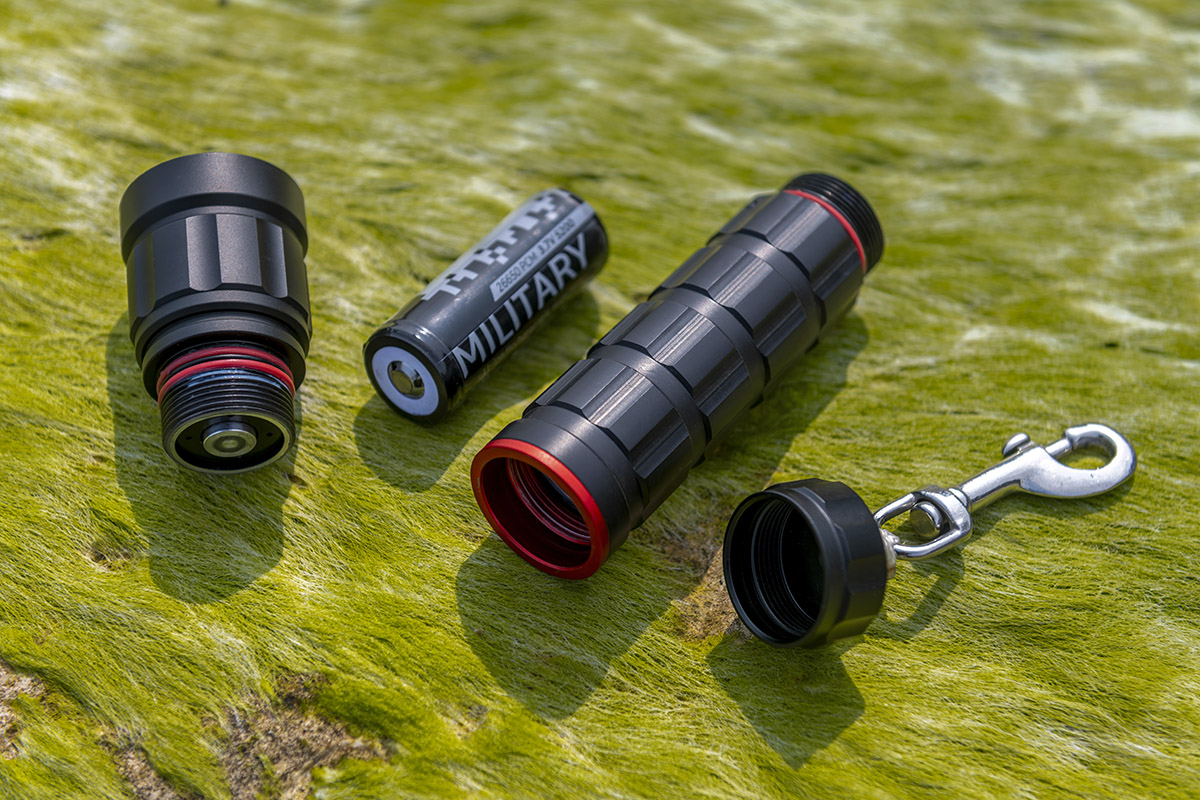
The K1 series are powered by rechargeable lithium-ion cells that provide generous burn times across the range. The smaller of the two models – the K1 Mini – uses a compact 3.7v 2000mAh 26350 Li-on battery offering a good 150 minutes (2.5 hours) burn time. The larger K1 Rescue model, on the other hand, uses a higher capacity 3.7v 5200mAh 26650 Li-on battery which delivers a generous 300 minutes (5 hours) of burn time.

Both models are supplied with a lightweight USB-powered charger. Replacement batteries seem easy enough to source with widespread availability online. Unlike AA and C batteries, though, it’s unlikely you’ll find them in your local grocery store so I’d recommend you buy a spare set if you don’t have time to wait for an Amazon delivery.
"...being prepared for the worst-case scenario is no bad thing, right? If the proverbial ever did hit the fan, that little cap-full of sea safety marker dye could just save your life!"
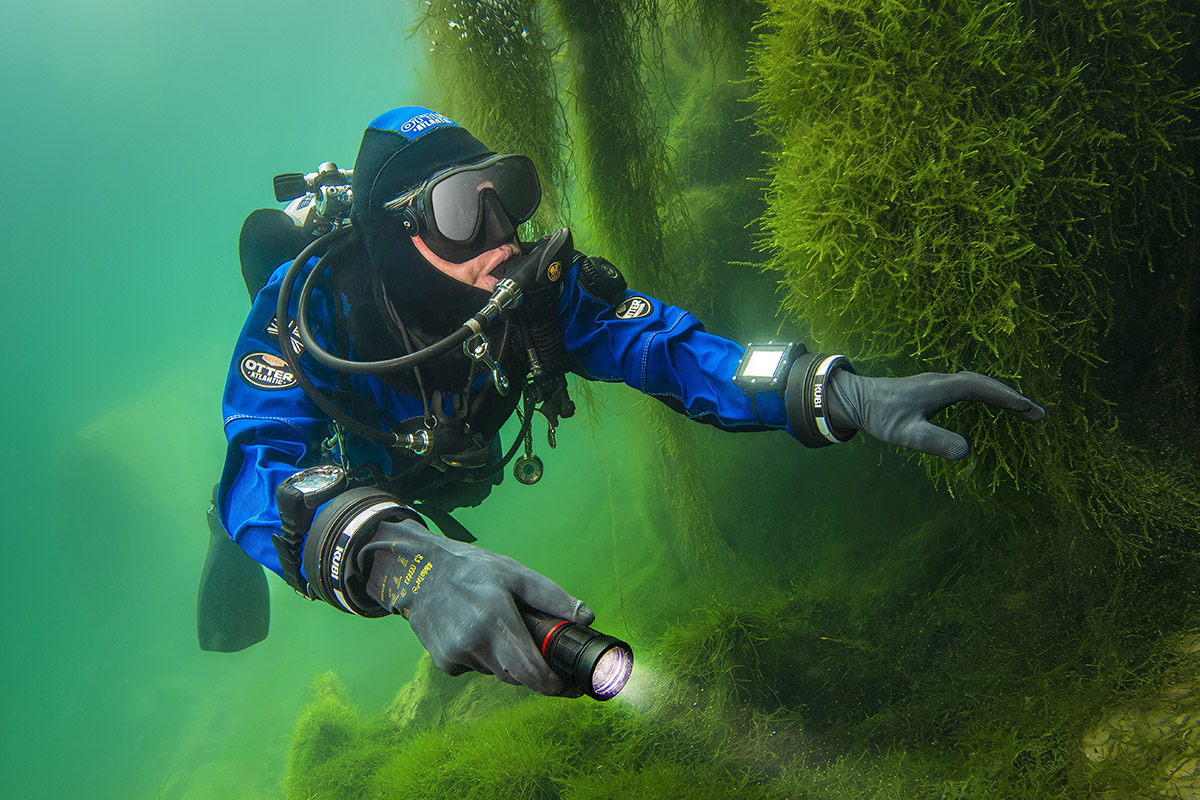
Considering the long burn times on offer, you’d be forgiven for assuming that light output is relatively low. Most backup lights limit brightness to around 300-400 lumens to deliver a good balance between burn time whilst still delivering enough light to safely operate in a low (or zero) light environment. The K1 lights, however, manage to deliver respectable burn times but with much higher output. Encapsulated within the sealed head is a single CREE LED emitter that Pandora claim will output 1400 lumens of light focused into an 8-9 degree beam with a 5600k (daylight) colour temperature. In tests, the difference in brightness between the K1 and rival models was certainly noticeable. The built-in focusing lens produces a tightly focused bright hot spot with a dimmer umbrella-shaped halo.

Lost at sea...
Finally, we come to the most unusual innovation that really sets this model apart. Unique to the K1 Rescue model only, Pandora Lab have added something quite unique – a cleverly hidden sealed compartment in the base of the torch filled with sea safety marker dye (or, as Pandora call it, SMP – short for ‘Survival Marker Paint’). It’s one of those features that is so ridiculously simple yet so obvious that it makes you wonder why no one has ever done it before. As anyone who has ever dived off a boat in tidal areas will know, the potential to be lost at sea is always there. Whilst we can mitigate that risk using effective ascent protocols, surface marker buoys, an understanding of local currents and a half-decent skipper, being prepared for the worst-case scenario is no bad thing, right? If the proverbial ever did hit the fan, that little cap-full of sea safety marker dye could just save your life!

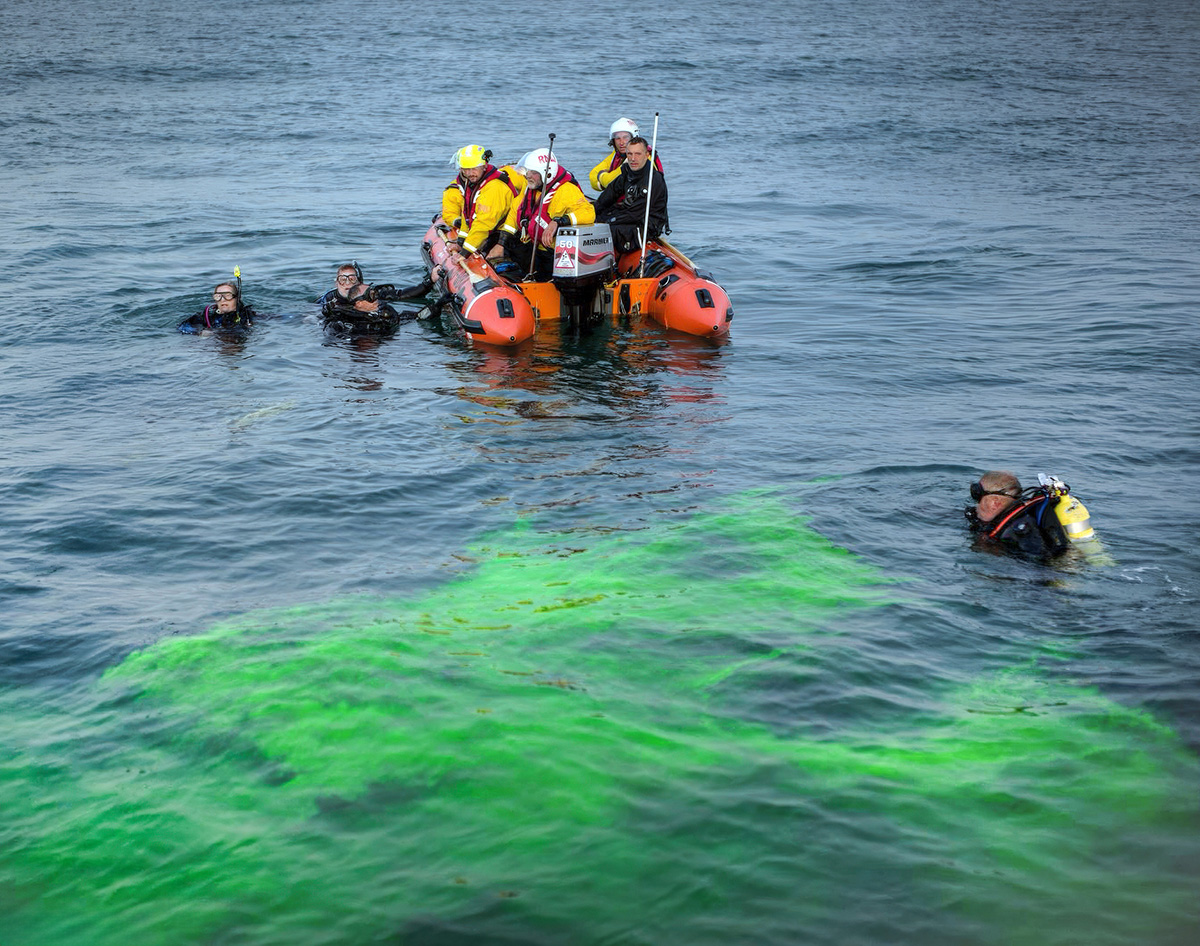
The theory is simple enough. In the event of being lost at sea, you simply unscrew the cap on the base of the torch and release the marker dye into the surrounding water. The effect is quite spectacular – even the small amount of powder held within the base of the K1 Rescue reacts rapidly with the surrounding water to produce a highly visible green fluorescent ‘slick’ which could potentially be spotted by a search vessel or SAR helicopter from a long distance. I tested just the tiniest amount of this powder in a large container of water and was shocked by just how strong the effect was – I’d strongly recommend not trying it out ‘just for kicks’ in open water as you’d likely trigger a full-on rescue response! Whilst the effect may be dramatic, the good news is that the dye’s effect on the environment is considerably less so – Pandora assures me that it’s both harmless to the environment and non-toxic. Clearly it takes ‘being green’ very seriously!
Final thoughts...
At any other time, it would be hard to get excited by what is seemingly a relatively ordinary device – it’s just a light, right? – but the Pandora Lab K1 series in both ‘Rescue’ and ‘Mini’ form are far from ordinary. Considering this is Pandora’s inaugural foray into the lighting market, they’ve clearly done their homework – the result are lights that deliver the solid and robust performance and build quality you’d expect from a premium back up light but with the addition of some genuinely headline innovations – the sealed head design, in particular, is a real game changer.

What is perhaps equally remarkable is that they sell at a price point not that dissimilar to rival models – the K1 Rescue, for example, is less than $200 USD / £200 UKP. In a market full of endless lights seemingly indistinguishable from one another, the Pandora Lab K1 series of lights are a refreshing entry that offer something quite special – a genuinely innovative product that delivers solid design and performance, all whilst maintaining the all-important KISS mantra.

All content © Jason Brown 2010-2026
No content may be reproduced without express written permission.